

Can You Move Out of State
With a Buy Here Pay Here Car?
Life is full of changes, and sometimes a new job or opportunity requires moving to a different state. If you financed your vehicle through a Buy Here Pay Here (BHPH) dealership, you might wonder if you can take your car with you. The short answer is that it is often possible, but it is not as simple as just packing up the car and driving away. Because the dealership is also your lender, a special relationship exists that requires clear communication. Your ability to move with the vehicle depends entirely on the terms of your financing agreement and the policies of the dealership. The most critical first step is to speak with your lender before you make any plans. They need to be aware of the vehicle's location to protect their investment, and they can provide the specific steps you must follow to keep your account in good standing during your relocation.
We understand that life happens, and new chapters can begin in new places. As a dealership that provides in-house financing, our team is committed to working with customers through all of life's transitions. While every financing agreement has specific terms, we believe in the power of open and honest conversation to find a path forward. If a move is in your future, we encourage you to contact our team to discuss your situation. We can help you understand your options and the process involved in moving with your vehicle.
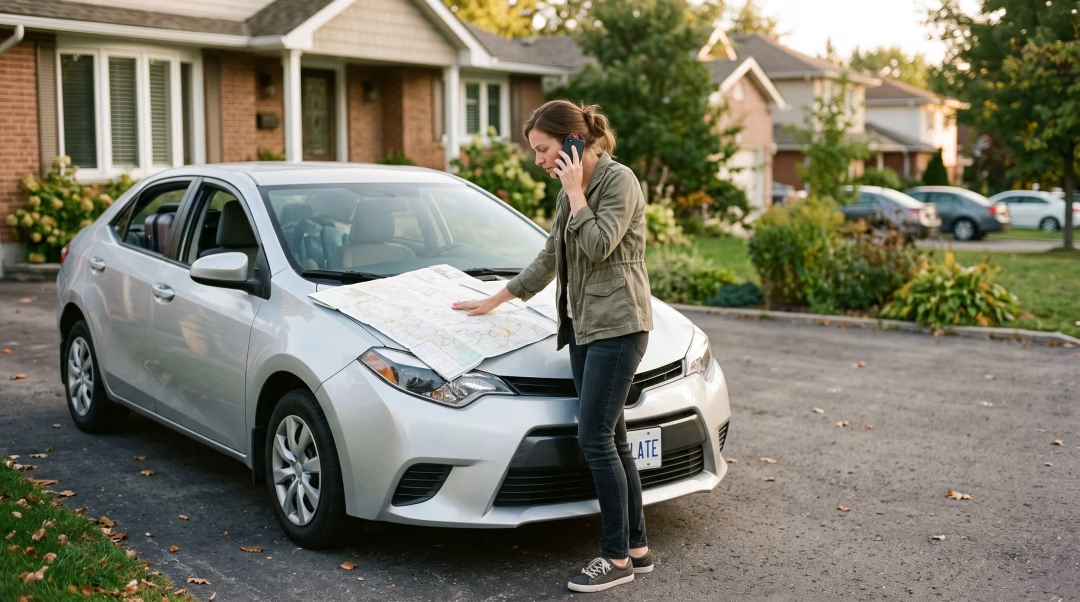
Why Moving With a BHPH Car Requires Special Steps
When you finance a vehicle through a traditional bank or credit union, that institution holds the lien on your title. With a Buy Here Pay Here arrangement, the dealership you bought the car from is also the bank. This direct relationship is a core feature of in-house financing. The dealership has a significant financial interest in the vehicle until the loan is paid in full. Therefore, the location of the car is a crucial piece of information for them.
Your retail installment contract is the legal document that governs your loan. It will almost certainly contain clauses about where the vehicle must be kept, the insurance you must carry, and your obligation to inform the lender of any changes to your address. Moving out of state without notifying the lender could be considered a breach of this contract. This could potentially lead to serious consequences, including the repossession of your vehicle. The dealership needs to know where the car is for several reasons, including state-specific laws regarding financing, insurance, and registration, as well as for servicing the loan and managing their asset.
Your First Step: Proactive Communication with Your Dealer
The single most important action you can take when planning an out-of-state move is to contact your BHPH dealer as soon as possible. Do not wait until the week before you leave. Give them ample notice to allow time for any necessary paperwork or arrangements. Being upfront and honest about your plans demonstrates responsibility and a commitment to honoring your loan agreement. This transparency can make the dealership much more willing and able to work with you.
When you speak with them, be prepared to provide details about your move, such as your new address, your new employer's information, and your updated contact details. The lender will need to verify this information. They will also walk you through their specific policies for customers who move out of state. Each dealership is different, so you cannot assume the process will be the same from one lender to another. This conversation is the foundation for a successful transition.
Navigating Key Details for an Out-of-State Move
Once you have spoken to your dealer and they have outlined their process, several key areas will need your attention. These details are vital for keeping your loan compliant and ensuring you can legally operate your vehicle in your new home state.
- Updating Your Car Insurance: Car insurance requirements vary significantly from state to state. Your lender will require you to maintain continuous full coverage insurance, and you must update your policy to reflect your new address and meet your new state's minimum coverage laws. You will need to provide the dealership with proof of this new, compliant insurance policy before or immediately upon moving.
- Vehicle Registration and Title: You will need to register your car in your new state, which typically involves transferring the title. Because the dealership is the lienholder, they physically or electronically hold the title. They will need to be involved in this process. They may need to send a copy of the title to your new state's DMV. You must understand the specific steps your new state requires and coordinate them with your lender.
- Making Payments: If you typically make your payments in person, you will need to arrange a new method. Ask your dealer about their accepted out-of-state payment methods, such as paying by phone, mailing a check or money order, or setting up automatic payments from your bank account.
- GPS Devices and Service: Some BHPH dealers may use GPS tracking devices on financed vehicles for asset management. It is important to ask how your move might affect this. Additionally, if your purchase included a limited warranty or service contract that requires service to be done at the dealership, you will need to understand how to handle repairs in a new state.
A Step-by-Step Checklist for Moving with Your Financed Car
To keep things organized, follow this simple checklist as you prepare for your move. This will help you cover all your bases and maintain a positive relationship with your lender.
- Review Your Contract: Before you even call, read your financing agreement carefully. Look for any clauses related to relocation, out-of-state garaging, or your responsibilities to notify the lender of an address change.
- Contact Your Dealer Early: Call the finance department at your dealership. Explain your situation, provide your moving timeline, and ask for a clear explanation of their policies and procedures.
- Gather Your Documents: Be prepared with your new address, proof of new employment (like an offer letter), and any other documents the dealer requests.
- Research Your New State's DMV Rules: Go online to the Department of Motor Vehicles website for your new state. Find out exactly what you need to do to register a vehicle with an out-of-state lienholder.
- Arrange for New Insurance: Contact your insurance provider or shop for a new one. Get a policy that meets your new state's laws and your lender's requirements, and make sure the dealership is listed as the loss payee/lienholder.
- Confirm Your Payment Method: Set up and confirm your new payment arrangement before your first payment is due from your new address.
- Finalize Registration: Once you move, complete the vehicle registration process at your local DMV promptly. Keep your lender updated with copies of the new registration.
Frequently Asked Questions About Moving with a BHPH Vehicle
Do I have to tell my BHPH dealer that I am moving out of state?
Yes, absolutely. Failing to inform your lender of a move out of state is almost always a violation of your financing contract. This could lead to a default on your loan and potential repossession of the vehicle. Proactive communication is essential for a smooth transition and to maintain a good relationship with your lender.
Can a BHPH dealer repossess my car just because I moved to another state?
A dealer cannot repossess your car simply because you moved. However, they can declare the loan in default if you violate the terms of your contract. Moving without permission, failing to update your insurance, or not providing them with your new address are all actions that could breach your contract and trigger the repossession process according to the terms you agreed to.
How do I handle car registration and license plates in my new state?
You must follow the laws of your new state, which typically require you to register the vehicle there within a specific timeframe. Since the dealer is the lienholder, you will need to coordinate with them. They will likely need to send documentation directly to the new state's DMV. Start by researching the requirements on your new state's official DMV website.
Will my insurance from Texas be valid in my new state?
No, you will need to get a new insurance policy that is written for your new state of residence. Insurance laws and coverage minimums differ by state. You must secure a new policy that meets the legal requirements of your new home and continue to list the dealership as the lienholder. Provide proof of this new policy to your lender immediately.
How can I continue making payments if I am no longer local?
Most dealerships offer several options for remote payments. Common methods include online payment portals, paying by phone with a debit card, setting up recurring automatic payments (ACH) from a bank account, or mailing a cashier's check or money order. Discuss these options with your dealer to find the one that works best for you and set it up before you move.
