

Does a Clean Car
Get a Better Trade-In Offer?
When you are getting ready to trade in your vehicle, your primary goal is to get the best possible offer. It is a question we hear frequently from our customers: does taking the time to clean a car actually result in a better trade-in value? The answer is unequivocally yes, though the reasons might be more complex than you think. A clean vehicle does more than just present well visually; it communicates a powerful message to the dealership appraiser about the history of its care and maintenance. Think of it as the first impression your car makes. A polished, detailed vehicle removes ambiguity and allows our appraisal team to see its genuine condition, which can significantly influence the final offer. This simple, low-cost preparation can prevent unnecessary deductions from your offer, helping you maximize the credit your vehicle deserves towards your next purchase from our used inventory.
Ultimately, the cleanliness of your trade-in directly impacts the perceived value and the appraiser's confidence. A vehicle with a spotless interior and a gleaming exterior suggests that its mechanical components have likely received the same level of meticulous care. This is not about concealing potential issues; it is about showcasing your car's best attributes and making the appraiser's evaluation process straightforward. A vehicle that requires immediate, deep cleaning before it can even be properly assessed represents an upfront reconditioning cost, a factor that can be reflected in the initial offer.
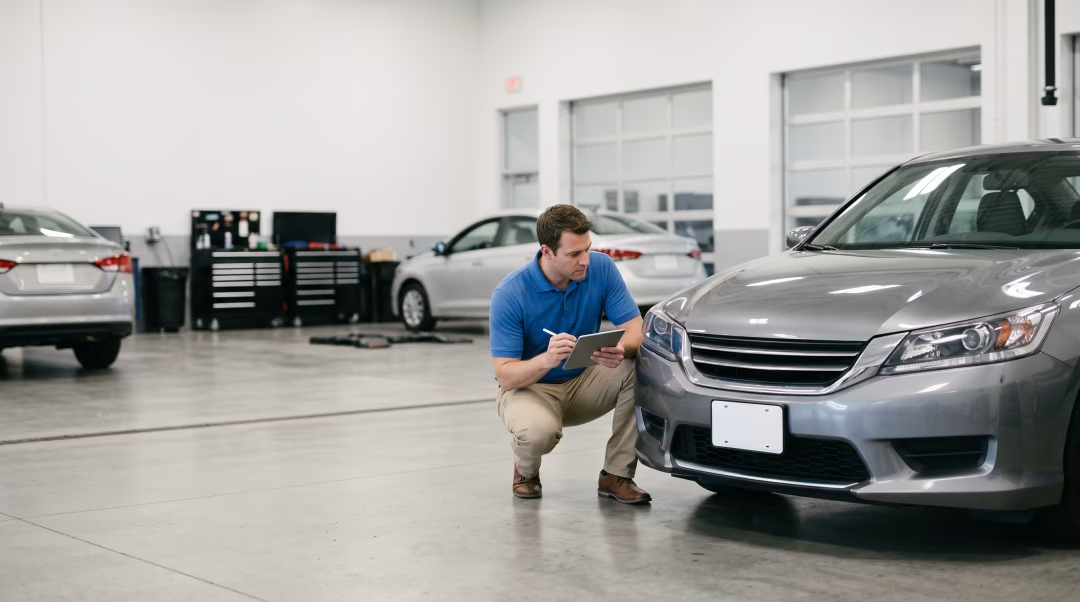
The Real Impact of Cleanliness on Your Trade-In Value
The process of appraising a used vehicle is a detailed evaluation of its condition, market demand, and potential reconditioning costs. While online tools can provide a baseline, the final offer is determined by a physical inspection. This is where the effort you put into cleaning your car pays dividends. It is less about magically increasing the car's book value and more about preventing the appraiser from reducing the offer due to correctable issues. A dirty, cluttered car forces an appraiser to make assumptions, and those assumptions often lean toward the cautious side to account for unseen problems or necessary cleaning expenses.
First Impressions: The Psychology of an Appraisal
Imagine two identical vehicles, same year, make, model, and mileage. One arrives covered in a layer of dust, with a cluttered interior, stained seats, and old food wrappers on the floor. The second arrives freshly washed, waxed, and vacuumed, with a clean, neutral smell. Which one do you think an appraiser will view more favorably? The clean car instantly suggests a history of responsible ownership. The appraiser is more likely to infer that if the owner took care of the car's appearance, they probably also kept up with oil changes, tire rotations, and other routine maintenance. This positive first impression can set a more favorable tone for the entire appraisal, leading to a stronger offer from the start.
Making the Appraiser's Job Easier
Beyond psychology, there is a practical reason a clean car helps. An appraiser's job is to identify any imperfections that will cost the dealership money to fix before the car can be placed on the lot for resale. This includes scratches, dings, paint swirls, and interior damage. A layer of dirt and grime can easily hide these flaws. When an appraiser cannot clearly see the condition of the paint and body panels, they may have to estimate potential damage conservatively, which can lower your offer. By presenting a clean surface, you allow them to perform an accurate inspection. The same holds true for the interior. Clean upholstery and carpets let them see the true condition, rather than guessing what might be lurking under the dirt and stains. To understand the full process, you can learn more about how trade-in value is calculated at a used car dealer.
Your Pre-Trade Detailing Checklist
Getting your car ready for its appraisal does not necessarily require a professional detailer, though that is an option. With a few hours and some elbow grease, you can dramatically improve its presentation. Focus on these key areas:
Exterior Care
- Thorough Wash: Clean the entire body, including door jambs, rocker panels, and wheel wells.
- Wax and Polish: A coat of wax not only makes the paint shine but can also fill in minor scratches.
- Wheels and Tires: Clean the wheels to remove brake dust and apply a tire shine product for a new-look finish.
- Glass and Lights: Ensure all windows, mirrors, headlights, and taillights are crystal clear and free of haze.
Interior Detailing
- Declutter Completely: Remove every personal item. This includes items in the glove box, center console, trunk, and door pockets. An empty car looks larger and better cared for.
- Vacuum Thoroughly: Vacuum the carpets, floor mats, and seats. Use attachments to get into crevices and under the seats.
- Wipe Down Surfaces: Clean the dashboard, steering wheel, door panels, and center console with an appropriate interior cleaner.
- Address Stains: Use an upholstery or carpet cleaner to tackle any visible stains on the seats or floor.
- Eliminate Odors: Lingering smells from pets, smoke, or food can significantly detract from the value. Use an odor neutralizer or have the interior professionally treated if necessary.
Minor Repairs vs. Major Overhauls
While cleaning is almost always a worthwhile investment of your time, the question of repairs is more complex. As a general rule, you should fix minor issues that a potential buyer would easily notice. This includes replacing burnt-out light bulbs, touching up small paint chips, or ensuring all interior buttons and knobs are present and functional. However, investing in major mechanical repairs or significant bodywork right before trading in your car is often not cost-effective. Dealerships can typically perform these repairs at a lower cost than consumers can, so you are unlikely to recoup the full amount of your investment in the form of a higher trade-in value. Focus on the low-cost, high-impact presentation improvements.
Organize Your Documentation
Completing the picture of a well-maintained vehicle involves more than just its physical condition. Arriving at the dealership with your paperwork in order reinforces the positive impression. Gather your vehicle's title, registration, and any service records you have. Having maintenance history available can substantiate the vehicle's condition and demonstrate your diligence as an owner. Do not forget to bring all sets of keys and the owner's manual. These small details contribute to a smoother process and show the appraiser that the vehicle is complete and ready for its next owner. When you are ready, you can easily value your trade with us online to get a preliminary estimate.
How much more can I get for a clean trade-in?
There is no fixed dollar amount, as it depends on the vehicle's initial condition. However, cleaning a car is about preventing deductions. A vehicle that needs a full detail might see its offer reduced by a few hundred dollars to cover that cost. More importantly, a clean car builds appraiser confidence, which can prevent them from making larger, conservative deductions for potential hidden issues.
Is a professional detail worth the cost before trading in?
For most vehicles, a thorough at-home cleaning is sufficient. However, if your car has significant stains, strong odors like smoke, or if you simply lack the time, a professional detail can be a wise investment. The cost, typically between $150 and $300, can often be recovered by avoiding deductions and securing a stronger trade-in offer.
Should I fix small dents and scratches before trading in my car?
For very minor cosmetic issues like small paint chips, a simple touch-up pen can be a good idea. For larger scratches or dents, it is often best to leave them alone. A dealership's body shop can usually repair these imperfections for much less than you would pay, so you are unlikely to see a full return on your repair investment.
Does removing personal items really make a difference?
Yes, absolutely. A car full of personal belongings looks cluttered and smaller, and it makes it difficult for the appraiser to inspect the condition of the seats, consoles, and storage compartments. Removing everything shows respect for the process and presents the car as a product ready for sale, not as your personal space.
What if my car has a strong odor, like smoke or pets?
Odors are a major factor in trade-in valuation because they can be very difficult and expensive to remove. If basic cleaning and airing out do not work, investing in a professional ozone treatment or deep interior shampoo is highly recommended. An unresolved odor issue is a significant red flag and can lead to a substantial reduction in your trade-in offer.
