

Gas vs. Diesel Used Trucks:
Which Costs Less to Own?
Choosing between a used gas or diesel truck is one of the biggest decisions a buyer can make. It goes far beyond the initial price tag on the windshield. The true cost of ownership unfolds over months and years, involving everything from fuel prices and maintenance routines to unexpected repairs and eventual resale value. Many drivers are drawn to the immense torque and towing power of a diesel, while others prefer the lower upfront cost and simpler maintenance of a gasoline engine. This decision impacts your daily budget and your long-term financial picture. Understanding the key differences is essential to selecting a truck that not only meets your needs for work and daily life but also aligns with what you are prepared to spend over the entire time you own it. We are here to break down the real-world costs to help you make an informed choice for your next used truck.
The debate between gas and diesel power is filled with strong opinions, but the right answer truly depends on your specific needs. It is not just about which engine is "better," but which is the better financial and practical choice for you. In the detailed guide below, we explore every aspect of ownership cost, from the purchase price and fuel economy to the critical differences in maintenance, repair expenses, and long-term value. Let’s dive into the numbers and scenarios to find your perfect truck.
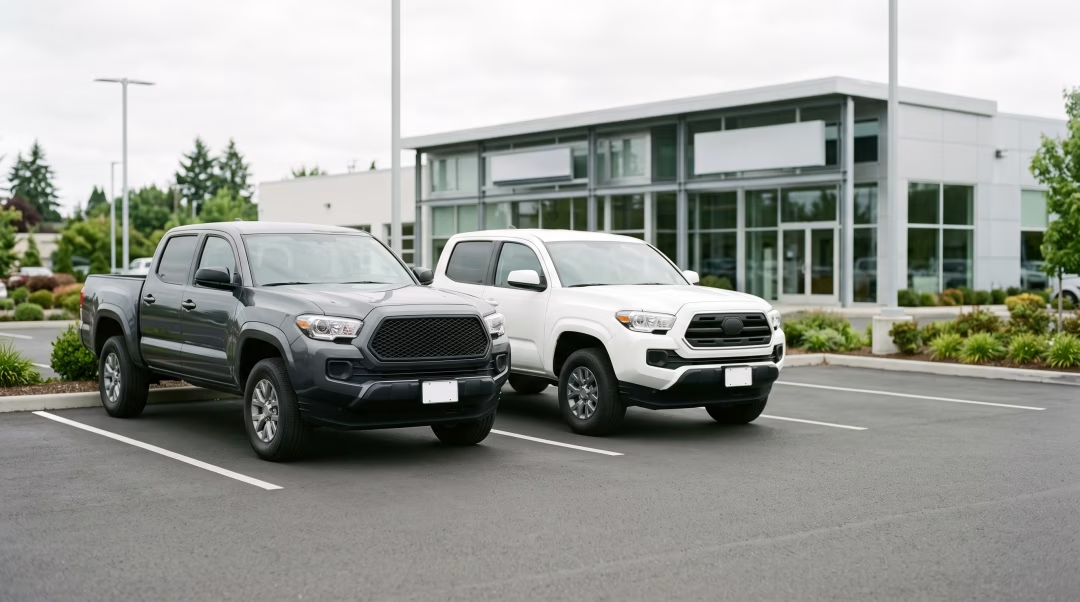
A Deep Dive into the True Cost of Owning a Used Truck
When you are browsing our used inventory, the sticker price is the first number you see, but it is only the first chapter in the story of your truck's total cost. The gas vs. diesel dilemma is a classic for a reason; each option presents a unique set of financial trade-offs. To determine which costs less to own, we must look beyond the initial purchase and analyze the day-to-day and long-term expenses that come with each engine type.
The Initial Purchase Price: The First Hurdle
The first and most noticeable difference is the upfront cost. Generally, a used diesel truck will have a higher purchase price than a comparable gasoline-powered truck of the same year, model, and condition. This price gap exists for several reasons. Diesel engines are built with heavier, more robust components to withstand higher compression ratios, making them more expensive to manufacture. This premium is passed on to the new buyer and often carries over into the used market. Because of their reputation for longevity, diesel trucks also tend to hold their value well, which keeps their resale prices higher.
For a budget-conscious buyer, a gasoline truck presents a lower barrier to entry. You can often get into a newer model or a higher trim level for the same price as an older or more basic diesel truck. If your financing capacity is a primary concern, the lower initial cost of a gas truck could make a significant difference in your monthly payment. You can explore how different purchase prices might affect your payments in our financing area.
Fuel Costs and Efficiency: The Marathon, Not the Sprint
Fuel is one of the most significant ongoing expenses for any truck owner. The calculation here is a two-part equation: the price per gallon and the miles per gallon (MPG).
- Diesel Fuel Price: Diesel fuel typically costs more per gallon than regular unleaded gasoline. This price difference can fluctuate based on season and market conditions, but it is a factor you must include in your budget.
- Diesel Fuel Efficiency: The major advantage for diesel engines is their superior fuel economy. Diesel fuel contains more energy per gallon than gasoline, and diesel engines are more efficient at converting that fuel into power. This means a diesel truck can often travel 20% to 35% farther on a gallon of fuel compared to a similar gas truck, especially when towing or hauling heavy loads.
So, which wins? It depends on your driving habits. If you drive a lot of highway miles or frequently tow heavy loads, the superior MPG of a diesel can eventually overcome the higher price per gallon, saving you money at the pump over the long term. If your truck is primarily for short city commutes and occasional light hauling, the fuel savings may not be enough to offset the higher cost per gallon, making a gas truck the more economical choice for fuel. You can learn more about how to estimate fuel costs before making a final decision.
Maintenance and Repairs: Where the Costs Can Diverge
Maintenance is where the financial paths of gas and diesel ownership can dramatically split. While both require regular upkeep, the complexity and cost differ significantly.
Routine Maintenance:
Gasoline engines are generally simpler and cheaper to maintain. Oil changes, spark plugs, and air filters are all relatively inexpensive. A diesel engine, on the other hand, requires more specialized care. Oil changes are more expensive because diesel engines hold much more oil (sometimes 12 quarts or more), and the oil itself is a costlier, specialized formula. Diesel engines also have multiple fuel filters that need to be replaced periodically, an expense that gas engines do not have. For a clear picture of potential costs, it helps to understand how much you should budget for car maintenance each month.
Major Repairs:
This is the area that can be most intimidating for potential diesel owners. The high-pressure fuel systems, complex turbochargers, and emissions components (like Diesel Particulate Filters and Selective Catalytic Reduction systems) are marvels of engineering, but they can be incredibly expensive to repair or replace if they fail. A set of fuel injectors on a diesel truck can cost thousands of dollars, whereas injectors for a gas engine are a fraction of that price. While gas engines have their own potential for costly repairs, the average major repair on a diesel is almost always more expensive. A thorough test drive and a pre-purchase inspection are critical when considering a used diesel truck.
Performance, Longevity, and Resale Value
The ultimate value proposition comes down to what you need the truck to do and how long you plan to keep it. Diesel engines produce massive amounts of low-end torque, which is the force that gets a heavy load moving. For anyone who regularly tows a large boat, a fifth-wheel RV, or heavy construction equipment, the effortless power of a diesel is often non-negotiable. Trying to do the same job with a gas engine can cause excessive strain, poor fuel economy, and premature wear.
Diesel engines are built to last. It is not uncommon to see well-maintained diesel trucks on the road with 300,000, 400,000, or even more miles on the odometer. This incredible longevity means they hold their value exceptionally well. While you may pay more upfront for a used diesel, you will likely get a larger percentage of that investment back when you decide to sell or trade it in. This strong resale value can significantly lower the total cost of ownership over several years. If you are curious about what your current vehicle is worth, you can value your trade on our website.
Making the Final Decision
So, which truck costs less to own? The honest answer is: it depends entirely on you.
- A Gas Truck likely costs less if: You use your truck as a daily driver, have a shorter commute, only haul light loads occasionally, prioritize a lower purchase price and monthly payment, and prefer simpler, less expensive maintenance.
- A Diesel Truck likely costs less if: You tow heavy loads frequently, drive long distances regularly, plan to keep the truck for a very long time, and prioritize fuel efficiency under load, engine longevity, and high resale value.
The best way to decide is to be realistic about your needs. Do not pay the diesel premium if you are not going to use its capabilities. Conversely, do not buy a gas truck that will be overworked and strained if you have serious towing to do. If you have questions about which option is right for you, do not hesitate to contact us. Our team is here to help you analyze your needs and find the perfect used truck for your life and budget.
Is a used diesel truck more expensive to insure?
Generally, yes. Because diesel trucks have a higher purchase price and can be more expensive to repair after an accident, insurance premiums are often slightly higher than for a comparable gasoline model. The difference is usually not dramatic, but it is a good idea to get insurance quotes for both types of trucks you are considering to factor that into your overall budget.
How many miles is too many for a used diesel truck?
This is a common question, and the answer is different than for a gas vehicle. While 150,000 miles might seem high for a gas engine, a well-maintained diesel is often just getting broken in. Many diesel engines are designed to last for 500,000 miles or more. When evaluating a high-mileage diesel, the maintenance history is far more important than the number on the odometer. A truck with 200,000 miles and a perfect service record can be a much better buy than one with 100,000 miles and a questionable history.
Do diesel trucks require special maintenance in the Texas heat?
While all vehicles benefit from diligent maintenance in extreme heat, diesel engines have cooling systems that work very hard, especially when towing. It is crucial to ensure the coolant is clean and at the proper level. The intense heat can also be hard on batteries and fuel systems. Sticking to a strict maintenance schedule for oil changes, coolant checks, and fuel filter replacements is key to reliability during a hot Texas summer.
What is Diesel Exhaust Fluid (DEF) and is it expensive?
DEF is a solution injected into the exhaust stream of modern diesel trucks (typically 2011 and newer) to reduce harmful emissions. You have to refill the DEF tank periodically, usually every few thousand miles. It is an additional fluid you have to buy, but it is not prohibitively expensive. It is readily available at auto parts stores and truck stops, and a 2.5-gallon jug typically costs between $15 and $25. It is a necessary and manageable running cost for a modern diesel.
Are modern gasoline engines getting better for towing?
Absolutely. Modern gasoline V8 engines, particularly those with direct injection and advanced transmissions, are more capable than ever. They offer impressive horsepower and have significantly higher towing capacities than gas trucks from a decade ago. For many users who tow loads under 10,000 pounds, a modern gas truck is more than capable and can be a very cost-effective alternative to a diesel.
