

How Often Should You
Replace Your Brake Pads?
Understanding when to replace your brake pads is one of the most critical aspects of vehicle ownership. Your braking system is the single most important safety feature on your car, and worn pads can significantly increase stopping distances. There is no single, universal answer to how often they need replacement; the timeline can vary dramatically from one vehicle to the next. A common estimate is every 25,000 to 70,000 miles, but this wide range highlights how much driving habits and conditions matter. City driving with frequent stops is much harder on brakes than steady highway cruising. The type of vehicle you drive and the material of the brake pads themselves also play a massive role in their longevity. Paying attention to your car's performance and learning the warning signs of wear are the best ways to stay safe on the road and manage maintenance costs effectively.
Proactively managing your brake health not only keeps you safer but also helps prevent more expensive repairs down the line. When brake pads wear down completely, they can damage other costly components like rotors and calipers. By understanding the key factors that affect wear and learning to recognize the early warning signs, you can address the issue before it becomes a major problem. This knowledge empowers you to make informed decisions about your vehicle's upkeep, ensuring it remains a reliable and safe mode of transportation for you and your family.
Diving Deeper into Brake Pad Replacement
While the general guideline of 25,000 to 70,000 miles provides a starting point, it is far too broad to be a reliable maintenance schedule for your specific vehicle. To truly understand your car's needs, you must consider the unique variables that impact your braking system's lifespan. Relying solely on mileage can be misleading and potentially unsafe. Instead, a combination of regular inspections and awareness of your vehicle's behavior is the most dependable approach. Let's break down the primary factors that determine how often you will need to head in for a brake service.
Key Factors That Influence Brake Pad Longevity
Not all driving is created equal, and your daily routine is the single biggest contributor to brake pad wear. Understanding these elements will help you better predict your maintenance needs.
- Driving Habits: Are you an aggressive driver who brakes hard and late, or do you prefer to coast to a stop? Aggressive braking generates more heat and friction, wearing down pads much faster. Similarly, drivers who tailgate are forced to use their brakes more often than those who maintain a safe following distance.
- Environment: City driving in heavy Dallas traffic with constant stop-and-go is notoriously hard on brakes. In contrast, a long, rural commute with minimal stops will extend the life of your pads significantly. Hilly terrain also forces more frequent braking, increasing wear compared to driving on flat ground.
- Vehicle Type: The size and weight of your vehicle matter. A heavy-duty pickup truck or a large three-row SUV requires more force to stop than a compact sedan. This increased workload means the brake components, including the pads, will naturally wear out sooner. If you are looking for a reliable commuter, check out our extensive used inventory.
- Towing and Hauling: If you frequently tow a trailer or carry heavy loads in your truck or van, you are placing extra strain on your braking system. The added weight dramatically increases the energy required to slow down, leading to accelerated pad wear.
- Brake Pad Material: Brake pads come in several different materials, each with its own characteristics for performance, noise, and lifespan. Organic pads are often quiet and inexpensive but wear faster. Semi-metallic pads offer strong performance but can be noisy and harder on rotors. Ceramic pads provide a great balance of quiet operation, low dust, and long life, but typically come at a higher price point.
Warning Signs That Your Brake Pads Need Replacing
Your vehicle will almost always give you clear signals when its brake pads are nearing the end of their service life. Ignoring these signs can lead to brake failure or damage to more expensive parts of the system. Learning how to check used car's brakes on a test drive is a valuable skill, but you should also be aware of these indicators on your own vehicle.
- Squealing or Screeching Noises: Most brake pads are manufactured with a small metal indicator tab. When the pad material wears down to a certain level, this tab makes contact with the brake rotor, creating a high-pitched squeal. This is an audible alert designed to let you know it is time for a replacement.
- Grinding Sound: If you hear a deep, metallic grinding or growling sound, it is a sign of a serious issue. This often means the brake pad material is completely gone, and the metal backing plate is grinding against the rotor. This can cause severe damage and requires immediate attention.
- Vibration or Pulsation: If you feel a pulsing or vibrating sensation in the brake pedal or steering wheel when you apply the brakes, it may indicate warped rotors. Rotors can warp from excessive heat caused by worn pads or heavy braking. While this points to a rotor issue, it is almost always addressed with a full brake job including new pads.
- Longer Stopping Distances: If you notice that your car is taking longer to come to a complete stop than it used to, your brakes are not performing as they should. This "brake fade" is a clear safety concern and a sign that the pads have lost their effectiveness.
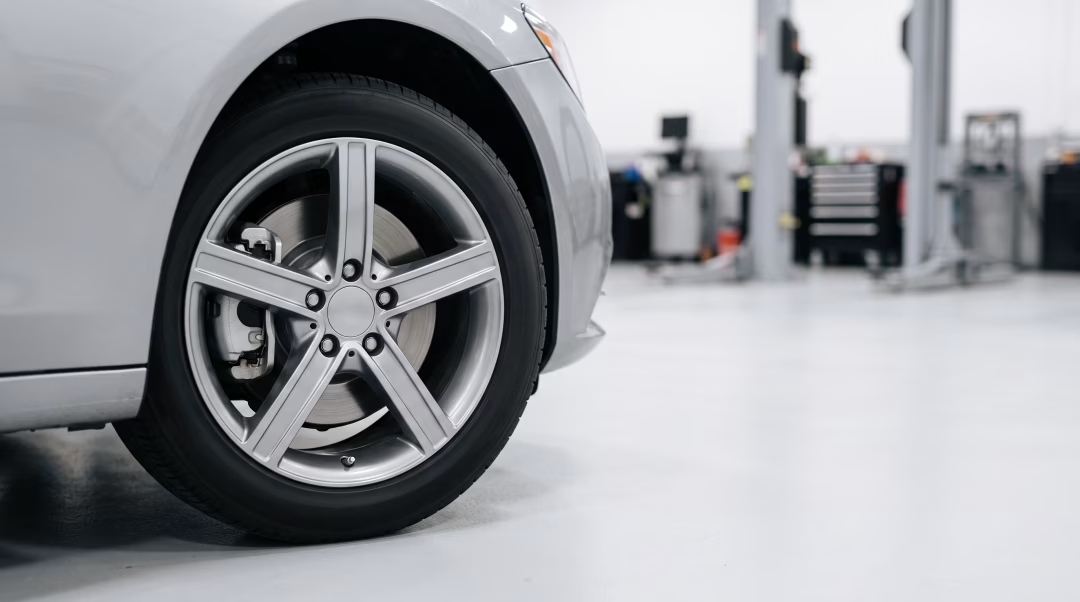
- Visual Inspection: You can sometimes see your brake pads through the spokes of your wheels. New pads have a thickness of about 8-12 millimeters. If you look and see less than 3-4 millimeters (about 1/8th of an inch) of pad material, they are due for replacement.
- Brake Warning Light: Many modern vehicles are equipped with a brake system warning light on the dashboard. If this light illuminates, it is crucial to have your entire brake system inspected by a professional as soon as possible.
Brake Pads, Rotors, and Calipers: Understanding the System
While brake pads get the most attention, they are just one part of a larger system. When you press the brake pedal, hydraulic fluid is pushed through lines to a caliper at each wheel. The caliper acts like a clamp, squeezing the brake pads against a spinning disc called a rotor. The friction created between the pads and the rotor is what slows and stops your vehicle. Because these parts work together, the condition of one affects the others. Running on worn pads can score and damage the rotors, turning a simple pad replacement into a more involved and costly repair. That is why planning for these expenses is so important. Learning how to plan for unexpected car repair costs can save you from financial stress when maintenance is due.
Frequently Asked Questions About Brake Pad Replacement
What is the average cost to replace brake pads?
The cost can vary widely depending on the vehicle's make and model, the type of brake pads used (organic, ceramic, semi-metallic), and labor rates in your area. Typically, you can expect to pay anywhere from $150 to $300 per axle for a standard pad replacement. If the rotors also need to be resurfaced or replaced, the cost will be higher.
Do I need to replace all four brake pads at once?
No, brake pads are typically replaced in pairs, either the front set or the rear set. The front brakes on most vehicles do the majority of the braking work (around 70%), so they tend to wear out much faster than the rear brakes. A technician will inspect all four wheels and recommend replacing only the pads that are worn.
What is the difference between replacing brake pads and replacing rotors?
Brake pads are the friction material that presses against the rotors. They are designed to be a wearable component. Rotors are the metal discs that the pads clamp onto. While rotors are much more durable, they can wear thin over time or become warped from heat. Often, rotors can be resurfaced (machined smooth), but if they are too thin or damaged, they must be replaced along with the pads.
What happens if I wait too long to replace my brake pads?
Waiting too long is both dangerous and expensive. Your stopping ability will be severely compromised, increasing the risk of an accident. Additionally, once the pad material is gone, the metal backing plate will grind against the rotor, causing deep grooves and damage. This will require a much more expensive rotor replacement instead of a simple pad swap. In extreme cases, it can also damage the brake caliper.
How long does a brake pad replacement service take?
For a straightforward brake pad replacement on a single axle, a skilled mechanic can typically complete the job in about an hour to an hour and a half. If the rotors need resurfacing or replacing, or if the calipers are seized and require extra work, the job could take longer, potentially two to three hours.
