

How Often Should You
Rotate Your Tires in Texas?
Driving in Texas means navigating everything from scorching summer asphalt on I-35 to sprawling rural roads and unpredictable city traffic. These unique conditions place significant stress on your vehicle's tires, making regular maintenance more than just a suggestion, it is a necessity. Tire rotation is a fundamental part of that maintenance, crucial for promoting even tread wear, extending the life of your tires, and maintaining optimal handling and safety. For Texas drivers, understanding how our distinct climate and driving habits impact tire health is key. A consistent rotation schedule helps you get the most value and performance out of your investment, keeping you safer on the road. Neglecting this simple service can lead to premature tire replacement, reduced fuel efficiency, and compromised vehicle stability, especially during sudden stops or in wet weather conditions, which are all too common in the Dallas area.
Protecting the value and safety of your vehicle is paramount. Regular tire rotations are a low-cost, high-impact service that contributes directly to your car's long-term reliability and performance. When you invest in a quality vehicle from our used inventory, consistent maintenance ensures it serves you well for years. Properly cared-for tires not only improve your daily driving experience but also play a role in your vehicle's future trade-in value. It is a simple step that safeguards your investment against the demanding Texas roads.
A Deep Dive into Texas Tire Rotation Schedules
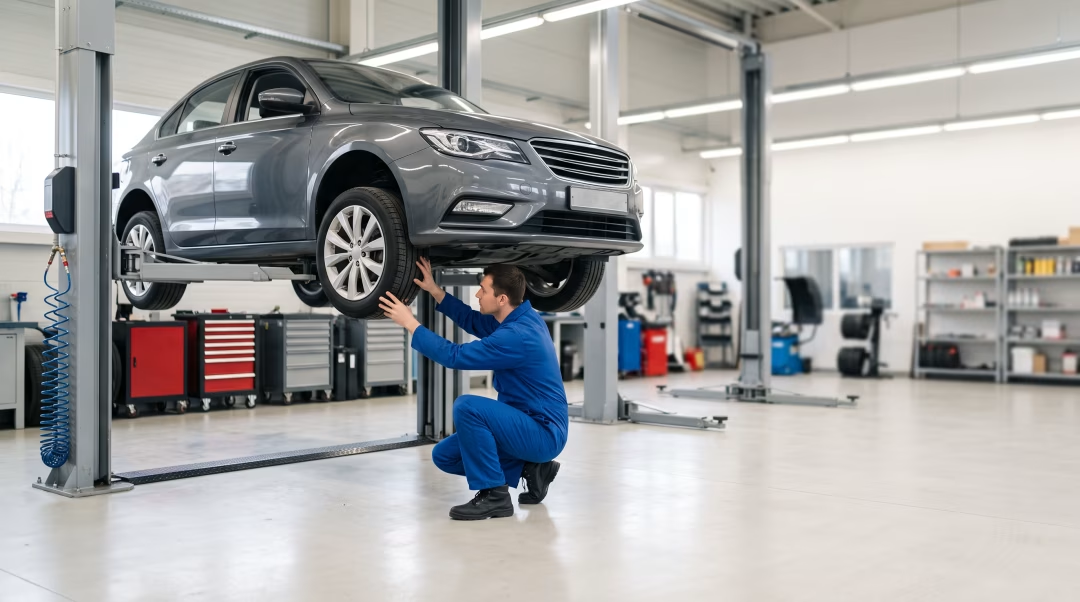
Tires are one of the most critical safety components of your car, yet they are often overlooked until a problem arises. Tire rotation is the process of moving each tire and wheel to a different position on the vehicle to ensure that the tread wears down evenly across all four tires. Your front tires, especially on a front-wheel-drive vehicle, carry more weight and handle the bulk of steering and braking forces, causing them to wear out faster than the rear tires. By systematically changing their positions, you distribute the wear more evenly, which is essential for maximizing their lifespan.
Why Texas Driving Conditions Demand Special Attention
While a general guideline for tire rotation is helpful, Texas drivers face a unique set of challenges that can accelerate tire wear. Understanding these factors helps explain why sticking to a schedule is so important here.
- Intense Summer Heat: The relentless Texas sun heats up asphalt to extreme temperatures. This heat increases the friction between your tires and the road, which can soften the rubber and speed up tread degradation. It also causes the air pressure inside your tires to fluctuate, which you can learn more about in our article on how heat affects tire pressure. This makes even wear from rotations even more critical.
- Long Commutes and High Speeds: Many North Texans have lengthy commutes on highways like the Dallas North Tollway or I-635. Sustained high-speed driving generates more heat and wear than stop-and-go city traffic, particularly on the front tires that do the steering.
- Varied Road Surfaces: From smoothly paved interstates to rough chip-seal rural roads and construction zones, Texas roads are anything but uniform. This variety can lead to uneven wear patterns that regular rotation helps to correct.
- Sudden Rainstorms: A sudden downpour can make roads slick. Tires with even tread depth provide better traction and are more effective at channeling water away, reducing the risk of hydroplaning. Unevenly worn tires can significantly compromise your safety in wet conditions.
The General Rule vs. The Texas Rule
Most vehicle manufacturers and tire brands recommend rotating your tires every 5,000 to 7,500 miles. A convenient way to remember this is to have it done with every oil change. However, given the demanding conditions in Texas, many local automotive experts suggest leaning toward the more frequent end of that spectrum. For many Dallas-Fort Worth drivers, rotating every 5,000 to 6,000 miles is a smart strategy to combat the accelerated wear caused by our climate and road conditions.
When looking at a pre-owned vehicle, it is always a good idea to check the tire condition. Uneven wear can be a sign of neglected maintenance or potential alignment issues. During a test drive, pay close attention to any vibrations or pulling, as these can also indicate tire or suspension problems.
Signs Your Vehicle Needs a Tire Rotation
Your car will often give you clues that it is time to move your tires. Be on the lookout for these common indicators:
- Uneven Tread Wear: The most obvious sign. Look for differences in tread depth between your front and rear tires, or even from one edge of a tire to the other.
- Vehicle Vibration: If you feel a noticeable vibration, especially at higher speeds (around 45 mph and up), it could be a sign of uneven wear or an imbalanced tire.
- Pressure Loss in One Tire: While this could indicate a puncture, a tire that consistently loses pressure faster than the others might be experiencing uneven wear that is causing a poor seal.
- Audible Road Noise: A humming or whirring sound that changes with your speed can sometimes be attributed to irregular tire wear creating a disruptive pattern on the tread.
Common Tire Rotation Patterns
The right rotation pattern depends on your vehicle's drivetrain. A professional technician will know the correct pattern, but it is helpful for you to be familiar with the basics.
Front-Wheel Drive (FWD): The most common pattern is the forward cross. The front tires are moved straight back to the rear, and the rear tires are moved to the opposite sides of the front axle (e.g., right rear to left front).
Rear-Wheel Drive (RWD) & 4-Wheel Drive (4WD): These vehicles typically use a rearward cross pattern. The rear tires are moved straight to the front, and the front tires are moved to the opposite sides of the rear axle.
All-Wheel Drive (AWD): These vehicles are most sensitive to differences in tire diameter, so even wear is crucial. The most common pattern is the X-pattern, where all four tires are swapped diagonally.
Regardless of the pattern, a rotation is also the perfect time to check tire pressure and inspect for any damage. Following a consistent maintenance schedule is one of the best ways to keep a high-mileage car reliable.
Frequently Asked Questions About Tire Rotation in Texas
Can I just rotate my tires whenever I get an oil change in Texas?
This is a great rule of thumb and works for many drivers. Since modern vehicles can have oil change intervals of 7,500 miles or more, it is important to check your owner's manual. If you do a lot of city driving or face harsh conditions, rotating your tires every 5,000 miles, even if that is between oil changes, is a proactive way to protect them from Texas's tough environment.
Does the type of vehicle I drive change how often I need a rotation?
While the 5,000 to 7,500-mile guideline applies to most FWD, RWD, and AWD vehicles, performance cars with different-sized front and rear tires (a staggered setup) have different needs. These tires can only be swapped from side to side, not front to back. All-wheel-drive vehicles are particularly sensitive to tread depth differences, so sticking to a strict rotation schedule is very important for them.
Will skipping a tire rotation void my tire warranty?
Yes, in many cases it can. Most tire manufacturers require proof of regular rotations according to their specified intervals to honor a tread life warranty. Neglecting this maintenance can be seen as owner negligence, potentially voiding your coverage. It is always best to keep service records as proof of compliance.
How much does a professional tire rotation typically cost in the Dallas area?
A standard tire rotation is one of the most affordable maintenance services. Prices can vary, but you can generally expect to pay between $25 and $75. Many service centers or tire shops will bundle this service with others like an oil change or wheel alignment for a package price, offering even better value.
Do new tires need to be rotated as often as older ones?
Absolutely. Establishing good habits from the start is key. The first rotation is arguably one of the most important, as it sets the pattern for even wear throughout the tire's entire life. Rotating your new tires according to the recommended schedule ensures you get the maximum performance and longevity you paid for.
