

How to Check a
Used Car's Battery Before Buying
When you are exploring the market for a pre-owned vehicle, the engine and transmission often get all the attention. However, a component just as critical to your daily reliability is the car battery. A failing battery is more than a minor inconvenience; it can leave you stranded at the worst possible time and lead to unexpected replacement costs right after your purchase. Understanding how to check a used car's battery before buying is a simple yet vital skill for any savvy car shopper. This inspection can reveal clues not only about the battery's current health but also about the vehicle's overall electrical system. A few quick checks can provide valuable insight, helping you make a more informed decision and avoid a common pitfall. Taking a moment to assess this power source protects your investment and provides peace of mind from the moment you drive off the lot.
While performing these visual and simple electronic checks yourself is a great first step, it is also wise to consider the complete picture of the vehicle's condition. Our team thoroughly inspects vehicles before they are offered for sale, but we always encourage buyers to be as informed as possible. A comprehensive test drive and a professional pre-purchase inspection can complement your own evaluation, creating a complete assessment of the car’s mechanical and electrical health for your confidence.
A Comprehensive Guide to Inspecting a Used Car Battery
The battery is the heart of a vehicle's electrical system, responsible for starting the engine and powering all the electronics when the engine is off. Its health is particularly crucial in a place like North Texas, where extreme temperatures can significantly shorten its lifespan. A battery that is on its last legs can be a sign of upcoming expenses or, in some cases, mask deeper electrical issues. By following this detailed guide, you can learn how to evaluate a battery like a seasoned pro, using nothing more than your eyes and a few basic tools.
The Initial Visual Inspection: What to Look For
Your first assessment begins before you even turn the key. A careful visual inspection of the battery and its connections can uncover obvious red flags. Pop the hood and locate the battery, which is typically a black rectangular box with two connection points, or terminals, on top.
- Check the Terminals and Cables: Look closely at the metal posts (terminals) where the battery cables connect. Do you see any chalky white, blue, or greenish buildup? This is corrosion, caused by sulfuric acid venting from the battery. While a small amount can sometimes be cleaned, heavy corrosion can interfere with the electrical connection, causing starting problems and preventing the battery from charging properly. Wiggle the cable connectors to make sure they are tight. A loose connection can be just as problematic as a weak battery.
- Examine the Battery Case: The plastic case of the battery should be flat on the top and sides. If you see any swelling, bulging, or cracking, it is a serious warning sign. A swollen battery case often indicates that it has been overcharged or has overheated, leading to internal damage. This is a safety concern, and a battery in this condition needs to be replaced immediately.
- Look for a Date Code: Most batteries have a sticker on them indicating their manufacture date. This is often a code, such as "9/22" for September 2022. Sometimes it is a letter and a number, where the letter corresponds to the month (A=January, B=February, etc.) and the number is the year. As a general rule, you should know that car batteries last about 3 to 5 years. A battery older than four years is living on borrowed time and will likely need replacement soon.
Performance Tests You Can Do Without Tools
After your visual check, the next step is to see how the battery performs under normal operating conditions. These simple tests can reveal a lot about its ability to hold a charge and deliver power.
First, listen carefully when you start the car. The engine should turn over crisply and start almost instantly. If you hear a slow, sluggish "rur-rur-rur" sound, it is a classic symptom of a weak battery struggling to provide enough power to the starter motor. This is especially telling on a cold engine that has been sitting for a while.
Next, try the headlight test. Before starting the engine, turn the key to the "On" position and switch on the headlights. Observe their brightness. Now, start the engine. Did the headlights get significantly brighter? If so, it suggests the alternator is working correctly, but the battery might be weak on its own. If the lights are very dim to begin with, even before you start the engine, that is another strong indicator of a drained or failing battery.
Using a Multimeter for an Accurate Diagnosis
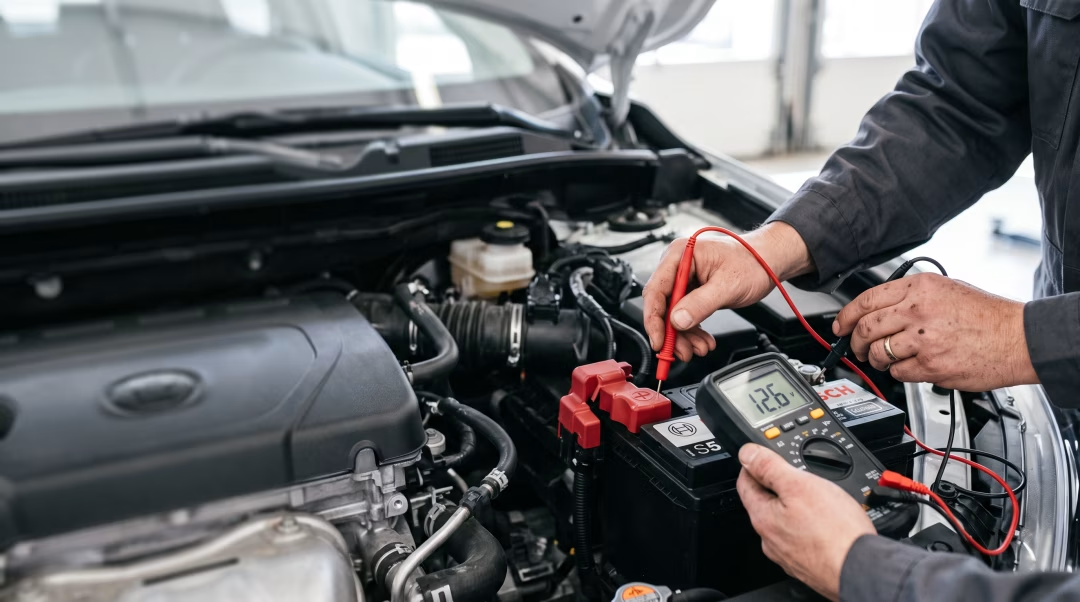
For the most accurate assessment of a battery's health, nothing beats using a digital multimeter. This is an inexpensive tool that measures voltage, and it can give you precise data about the battery and the vehicle's charging system. You can purchase one at any auto parts or hardware store. Even if you are not an expert, the process is straightforward.
1. Static Voltage Test (Engine Off):
Make sure the engine has been off for at least 30 minutes to get a true resting voltage. Set your multimeter to the 20V DC setting. Touch the red probe to the positive (+) terminal and the black probe to the negative (-) terminal. A healthy, fully charged 12-volt battery should read between 12.6 and 12.8 volts. A reading of 12.4 volts means it is about 75% charged, while a reading around 12.0 volts indicates it is almost fully discharged. Anything below 12.2 volts suggests the battery may have trouble holding a charge.
2. Cranking Voltage Test (Load Test):
This is the ultimate test of a battery's strength. Keep the multimeter connected to the terminals and have a friend turn the key to start the engine. Watch the voltage reading as the engine cranks. It is normal for the voltage to drop, but it should not fall below 9.6 volts. If it drops below this threshold, the battery is weak and will likely fail soon, especially when cold weather arrives.
3. Alternator Output Test (Engine Running):
This final test checks the car's charging system. With the engine running, check the voltage again. The multimeter should now read between 13.7 and 14.7 volts. This indicates the alternator is properly recharging the battery. If the reading is below 13.5 volts or above 15 volts, there could be a problem with the alternator or voltage regulator, which could damage even a new battery.
By taking these steps, you empower yourself with crucial information. Finding a weak battery does not have to be a deal-breaker, but it gives you a point for negotiation or helps you budget for a replacement. It is one of many important checks that ensure the used vehicle you choose is ready for the road ahead. For any questions about our inventory or our financing process, do not hesitate to contact us or start your pre-qualification process online.
How long do car batteries typically last in Texas?
In the intense heat of North Texas, a car battery's lifespan is often shorter than in milder climates. On average, you can expect a battery to last between 3 and 5 years. The high temperatures can accelerate the chemical reactions inside the battery, leading to a faster degradation of its internal components.
What does the white or blue powder on battery terminals mean?
That powdery substance is corrosion, typically lead sulfate, resulting from a chemical reaction with sulfuric acid vapor that can escape from the battery. It creates a poor electrical connection, which can prevent the battery from charging properly and make it difficult to start the vehicle. It is a sign that the battery or terminals need cleaning and inspection.
Is a car that starts slowly always a sign of a bad battery?
While a weak battery is the most common cause of a slow-cranking engine, it is not the only possibility. Other potential issues include a failing starter motor, a poor connection due to corroded battery cables, or a problem with the alternator not charging the battery sufficiently. However, checking the battery first is always the best place to start troubleshooting.
Can I just use a portable charger to test a used car's battery?
No, a battery charger only puts power into a battery; it does not test its health. A battery can accept a charge but still be unable to hold it or deliver the high amperage needed to start an engine. To properly test a battery's condition, you need a multimeter to check voltage levels or a dedicated battery load tester.
What is the ideal voltage for a used car battery?
A healthy car battery should have a resting voltage of around 12.6 volts when the engine is off. When the engine is running, the voltage should increase to about 13.7 to 14.7 volts, indicating the alternator is charging it. During engine cranking, the voltage should not drop below 9.6 volts. These three readings give you a complete picture of its health.
