

How to Improve Your Gas
Mileage On a Daily Commute
Are you feeling the pinch at the pump? With gas prices constantly fluctuating, your daily commute can quickly become one of the most significant expenses in your monthly budget. The good news is that you have more control over your vehicle’s fuel consumption than you might think. By making a few simple adjustments to your driving habits and staying on top of routine maintenance, you can significantly improve your car’s gas mileage. These small changes add up to real savings over weeks and months, freeing up money that can be used for other important financial goals. Maximizing every gallon of fuel not only helps your wallet but also reduces your vehicle’s environmental impact. This guide will walk you through practical, easy-to-implement strategies to help you spend less on gas and drive smarter every day. Learning how to stretch your fuel budget is a skill that pays dividends long after you leave the gas station.
While these driving and maintenance tips can boost the efficiency of any vehicle, the single most impactful factor on your long-term fuel costs is the car you drive. Modern engines, advanced transmissions, and aerodynamic designs in newer used vehicles can offer substantial MPG improvements over older models. If you find that you are spending too much time at the gas station, it might be time to explore a more fuel-efficient option. Browsing our extensive used inventory is a great first step toward a more economical daily commute.
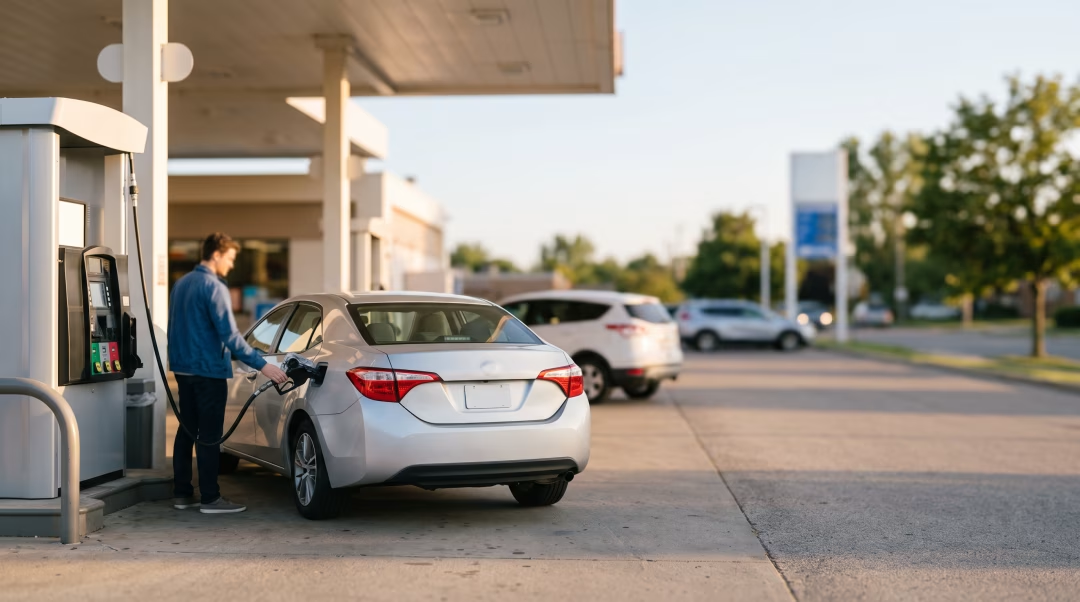
Comprehensive Strategies for Better Fuel Economy
Improving your gas mileage is a two-part process that involves both the driver and the vehicle. By mastering your driving technique and committing to regular vehicle care, you can transform your car into a much more efficient machine. Let's break down the most effective methods to help you save money on fuel, starting today.
Adjust Your Driving Habits for Maximum MPG
How you drive has a direct and immediate impact on how much fuel you use. Aggressive driving can lower your gas mileage by as much as 30% on the highway and 40% in stop-and-go city traffic. Adopting a smoother, more patient approach behind the wheel is the easiest way to see instant savings.
- Accelerate Gently: Treat the gas pedal like there's an egg underneath it. Hard acceleration forces the engine to work harder and consume more fuel. Gradually increasing your speed from a stop is much more efficient.
- Anticipate Traffic: Look far ahead on the road. By anticipating stops, you can coast to a red light or stop sign instead of braking hard at the last second. Reducing the need for sudden stops and starts is key to conserving fuel.
- Maintain a Steady Speed: Constant fluctuations in speed waste gas. When on the highway, use cruise control to maintain a consistent speed. This is typically more fuel-efficient than manually trying to hold your speed steady.
- Obey the Speed Limit: Gas mileage usually decreases rapidly at speeds above 50 mph. Driving 65 mph instead of 75 mph can improve your fuel economy by as much as 15%. Slowing down is not only safer but also cheaper.
- Avoid Excessive Idling: An idling car gets 0 miles per gallon. If you're going to be stopped for more than 60 seconds, it's often more fuel-efficient to turn off the engine. Modern cars require very little fuel to restart.
Vehicle Maintenance: The Key to Peak Efficiency
A well-cared-for car is an efficient car. Neglecting routine maintenance can cause a significant drop in your vehicle's MPG and lead to more costly repairs down the road. Sticking to a simple maintenance schedule is a smart investment in your car's health and your fuel budget.
One of the most critical and easiest checks is your tire pressure. Underinflated tires create more rolling resistance, which means your engine has to work harder to move the car. This can lower your gas mileage by over 3%. Check your tire pressure at least once a month using a quality gauge and inflate them to the manufacturer's recommended pressure, which you can find on a sticker inside the driver's side doorjamb. Do not use the pressure listed on the tire itself; that is the maximum pressure the tire can hold.
Regular engine tune-ups are also vital. This includes replacing spark plugs and checking the engine's air filter. A clogged air filter can restrict airflow to the engine, hurting performance and fuel economy. Using the manufacturer's recommended grade of motor oil can also improve your gas mileage by 1 to 2 percent. Look for oil that says "Energy Conserving" on the API performance symbol to be sure it contains friction-reducing additives.
Smarter Planning for Your Daily Drive
Beyond driving habits and maintenance, a little bit of planning can go a long way in reducing your fuel consumption. Every mile you do not drive is a mile of gas saved.
- Combine Your Errands: Plan to make multiple stops in one trip rather than taking several separate trips. A warm engine is more efficient than a cold one, so grouping your errands saves both time and fuel.
- Lighten the Load: Remove any unnecessary items from your vehicle. An extra 100 pounds in your trunk can reduce your MPG by up to 1%. The effect is based on the vehicle's weight—the lighter the car, the more excess weight affects its fuel economy.
- Reduce Aerodynamic Drag: Remove roof racks or cargo carriers when you are not using them. These accessories disrupt the airflow around your car, which can decrease your fuel economy by up to 5% at highway speeds.
- Choose Your Next Car Wisely: When it is time for a new vehicle, make fuel economy a top priority. You can learn more about the best used cars for good gas mileage in Texas to help inform your decision. Estimating your potential fuel costs before you buy is a crucial step in budgeting for your next car.
By applying these strategies, you can take control of your fuel expenses and make your daily commute more economical. If you have any questions about vehicle maintenance or want to explore more fuel-efficient options, do not hesitate to contact us or schedule a visit.
Frequently Asked Questions About Gas Mileage
Does cruise control really save gas?
Yes, in most situations, using cruise control on the highway can help save gas. It maintains a constant speed more effectively than the average driver can, preventing the unnecessary acceleration and deceleration that wastes fuel. However, it is not ideal for hilly or mountainous terrain, where it can be less efficient as it tries to maintain speed up steep inclines.
How much does tire pressure affect my MPG?
Properly inflated tires are crucial for fuel efficiency. According to the Department of Energy, you can improve your gas mileage by over 3% in some cases just by keeping your tires inflated to the proper pressure. Underinflated tires increase rolling resistance, forcing your engine to work harder and use more fuel.
Is it better to use the A/C or have the windows down?
It depends on your speed. At lower speeds, such as in city driving, opening the windows creates less of a fuel penalty than running the air conditioner compressor. However, at highway speeds (generally above 45 mph), open windows create significant aerodynamic drag that forces your engine to use more fuel. In that scenario, it is more efficient to roll up the windows and use the A/C.
Does warming up my car in the morning waste fuel?
Yes, idling to warm up your car is generally unnecessary and wastes fuel. Modern vehicles are designed to be driven gently for the first few minutes to warm up, which is more efficient than letting them idle in the driveway. Most manufacturers recommend driving off within 30 seconds of starting the engine.
Will using a higher octane fuel improve my gas mileage?
No, not unless your vehicle's manufacturer specifically requires or recommends it. Using a higher octane fuel than your car is designed for provides no benefit to performance or fuel economy. It will only cost you more money at the pump. Always use the octane rating specified in your vehicle's owner's manual for optimal performance and efficiency.
