

How to Keep an Older Car
Running Longer for Years to Come
The Secret to Vehicle Longevity
Owning an older car is a smart financial decision, and with the right care, it can provide reliable transportation for many years. The key to making your vehicle last is not a secret trick but a consistent commitment to proactive maintenance. Many drivers believe that once a car reaches a certain age or mileage, it is destined for expensive problems. However, the reality is that regular attention to fluids, filters, and other critical components can dramatically extend its lifespan. By staying ahead of potential issues and understanding what your car needs, you transform it from a simple mode of transport into a long-term, dependable asset. This guide will walk you through the essential steps and habits that will help you keep your trusted vehicle on the road and running smoothly, saving you money and giving you peace of mind.
Your Partner in Long-Term Reliability
Embracing these maintenance practices is the best way to protect your investment. Whether you are driving a car you have owned for years or considering one from our used inventory, this knowledge empowers you. A well-maintained older car is a testament to smart ownership, offering incredible value without the steep depreciation of a new vehicle. By understanding how to care for your car, you ensure it remains a reliable partner for your daily commute, family errands, and weekend adventures for a long time to come.
A Comprehensive Guide to Extending Your Car’s Life
In an era of rising vehicle costs, getting the most out of your current car is more important than ever. With diligent care, a vehicle with 100,000, 150,000, or even 200,000 miles can still have a long and productive life ahead. The difference between a car that lasts and one that doesn't often comes down to simple, consistent, and proactive maintenance. This guide delves deep into the specific areas you should focus on to keep your older car performing reliably, efficiently, and safely for as long as possible. It is less about luck and more about forming good habits that prevent small issues from becoming major, costly repairs.
Fluids: The Lifeblood of Your Vehicle
Just like the human body, your car relies on a variety of fluids to operate correctly. Ignoring them is one of a quickest ways to cause irreversible damage. Checking and changing fluids on schedule is the single most effective thing you can do for your vehicle’s longevity.
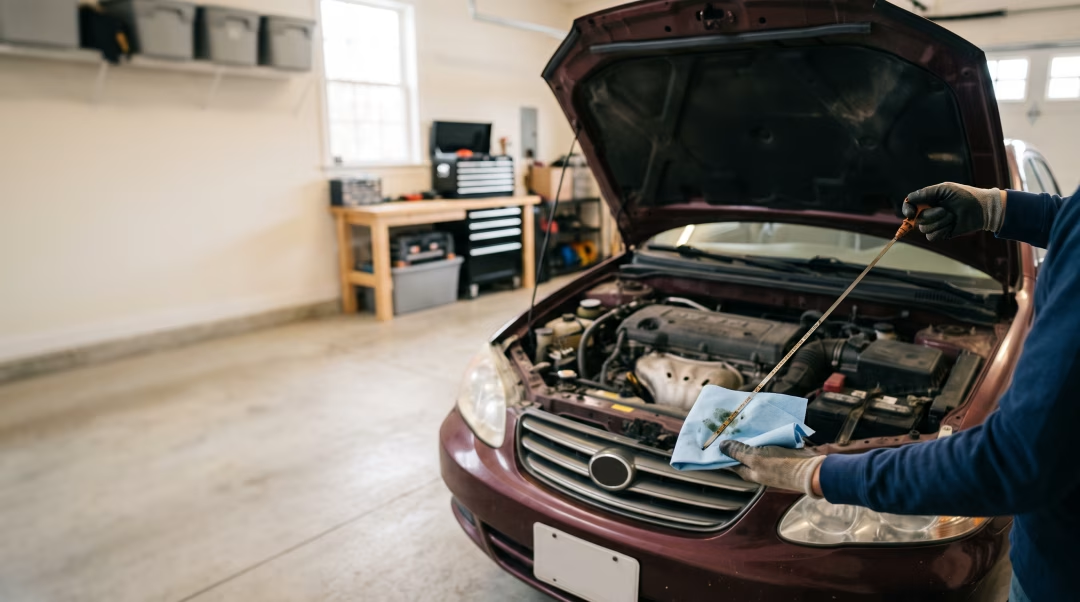
- Engine Oil: This is the most critical fluid. It lubricates moving parts, reduces friction, cools engine components, and removes contaminants. Older engines can be more susceptible to sludge buildup and oil consumption. Sticking to a regular oil change schedule, as outlined in your owner's manual, is non-negotiable. Learn more about how often you should change your oil in Texas heat to give your engine the best protection.
- Transmission Fluid: This fluid cools and lubricates the complex gears inside your transmission. Old, dirty fluid can lead to shifting problems, overheating, and ultimately, transmission failure—one of the most expensive repairs a car can need. Check the level and condition regularly; if it is dark brown, smells burnt, or contains particles, it is time for a change.
- Coolant (Antifreeze): The cooling system protects your engine from extreme temperatures, which is especially vital in the Dallas climate. Coolant prevents the engine from overheating in the summer and freezing in the winter. Over time, coolant loses its protective properties. A coolant flush every few years, per manufacturer recommendations, is essential to prevent corrosion and blockages in the radiator and engine.
- Brake Fluid: This hydraulic fluid transfers the force from your foot on the brake pedal to the brakes themselves. Brake fluid is hygroscopic, meaning it absorbs moisture from the air over time. This moisture can lower the fluid's boiling point, leading to a "spongy" brake pedal, and can cause internal corrosion of brake components. Bleeding and replacing the brake fluid every two to three years is a crucial safety measure.
- Power Steering Fluid: If your car has a hydraulic power steering system, this fluid makes turning the wheel easy. Low or contaminated fluid can make steering difficult and damage the power steering pump. If you hear a whining noise when you turn the wheel, check this fluid immediately.
Proactive Replacements: Belts, Hoses, and Filters
On an older vehicle, many rubber and plastic components become brittle and prone to failure. Replacing them before they break can save you from being stranded and prevent collateral damage to other parts of your engine. Creating a simple maintenance schedule can help you keep track of these important items.
Belts and Hoses: Visually inspect the serpentine belt and any other drive belts for cracks, fraying, or glazing. A snapped belt can cause you to lose power steering, electricity generation (alternator), and engine cooling (water pump) all at once. Similarly, check radiator and heater hoses for bulging, softness, or cracking, especially near the clamps. A burst hose can lead to rapid engine overheating.
Filters: Your car's filters keep contaminants out of sensitive systems. The engine air filter prevents dust and debris from being ingested by the engine, the fuel filter keeps impurities out of the fuel injection system, and the oil filter traps harmful particles circulating in the engine oil. All are inexpensive to replace and have a significant impact on performance, fuel economy, and engine life.
Battery: The extreme Texas heat is particularly hard on car batteries, often reducing their lifespan. If your battery is more than three years old, have it tested regularly. Look for signs of corrosion on the terminals and clean them with a wire brush. A weak battery can leave you stranded and put extra strain on your car's alternator.
Listen to Your Car: Sights, Sounds, and Smells
Your car is constantly communicating with you. Paying attention to changes in its behavior is key to catching problems early.
- Sounds: Do not ignore new noises. A high-pitched squeal when you start the car could be a loose belt. A grinding or scraping noise when you brake means the brake pads are worn out. A clunking sound when you go over bumps could signal a problem with the suspension.
- Sights: Pay attention to the dashboard. The check engine light is the most obvious, but also watch for temperature, oil pressure, and battery warning lights. Regularly check for fluid drips on your driveway. A small leak is much easier and cheaper to fix than a major component failure caused by fluid loss.
- Smells: A sweet, syrupy smell could indicate a coolant leak. A burning oil smell might mean oil is leaking onto a hot exhaust manifold. A burning rubber smell could be a slipping belt or a dragging brake. These smells are your car's way of telling you something is wrong.
Driving Habits and Exterior Care
How you drive has a direct impact on how long your car lasts. Aggressive driving with rapid acceleration and hard braking puts unnecessary stress on the engine, transmission, brakes, and suspension. A smooth, gentle driving style is far better for your car’s mechanical health and your fuel budget. Avoid long periods of idling when possible, as this can cause heat buildup and oil dilution. Furthermore, try to combine short trips, as frequent cold starts without allowing the engine to fully warm up cause accelerated wear.
Finally, keeping your car clean is more than just about appearances. Regular washing removes dirt, road salt, and bird droppings that can eat away at the paint and cause rust. Pay special attention to washing the undercarriage to remove mud and grime that can trap moisture and accelerate corrosion. Waxing your car a few times a year provides an extra layer of protection against the harsh Texas sun, which can fade and damage the paint over time. Taking these simple steps not only preserves your car's value but also contributes to its overall longevity.
How often should I change the oil in an older, high-mileage car?
While the old rule was every 3,000 miles, modern oils and engines can often go longer. For an older car, a conservative interval of every 5,000 miles or every 6 months, whichever comes first, is a safe bet. Using a high-mileage formula oil can also be beneficial as it contains additives to condition seals and reduce consumption.
Is it worth putting expensive synthetic oil in a high-mileage car?
In most cases, yes. Full synthetic oil provides superior protection against heat and breakdown, flows better in extreme temperatures, and has better cleaning properties. For an older engine, especially in the Texas heat, the added protection can be well worth the extra cost, potentially extending engine life and reducing sludge buildup.
What is the most overlooked maintenance item for older cars?
Coolant and brake fluid are often the most neglected. People tend to focus on oil changes but forget that these other fluids degrade over time. Old coolant can cause corrosion and overheating, while old brake fluid absorbs moisture and can lead to brake failure. Flushing these fluids according to the manufacturer's schedule is critical for safety and reliability.
Can my driving habits really make a big difference in the car's lifespan?
Absolutely. Smooth acceleration and braking reduce wear on the engine, transmission, and brake components. Allowing the car to warm up for a minute before driving off, especially on cold days, helps oil circulate properly. Avoiding potholes and rough roads when possible also reduces stress on the suspension. Gentle driving is one of the easiest and cheapest ways to extend your car's life.
At what point is a repair not worth it on an older car?
This is a personal financial decision, but a good rule of thumb is to compare the cost of the repair to the car's market value and the cost of replacing it. If a single repair, such as a complete engine or transmission rebuild, costs more than half the car's value or would put you in a better position to finance a more reliable vehicle, it may be time to consider moving on. You can always get a quick idea of your current vehicle's worth on our Value My Trade page.
