

How to Prevent Your
Car From Overheating in Traffic
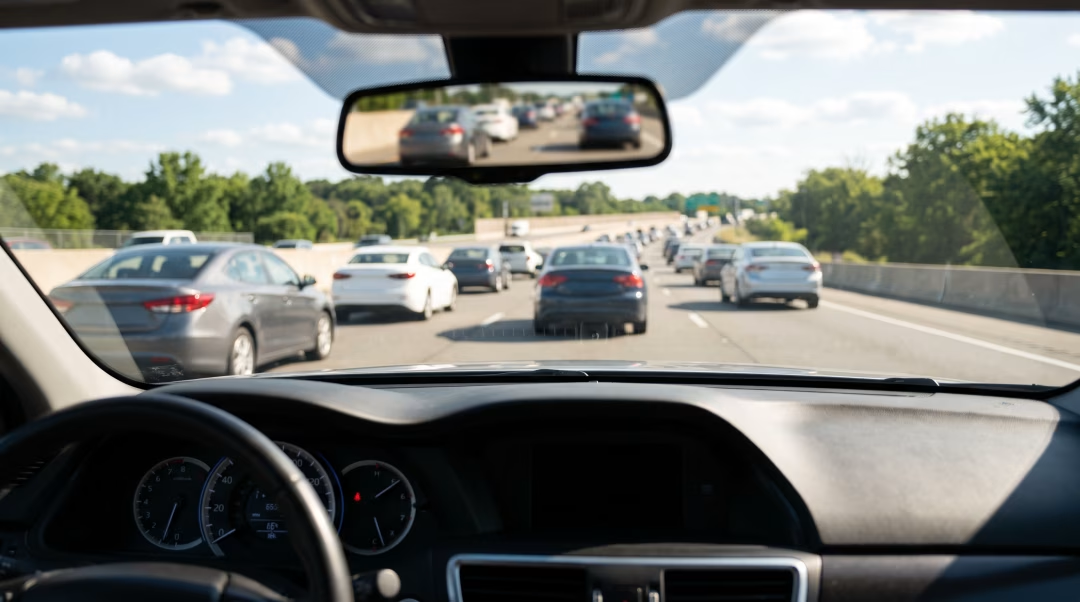
Nothing adds stress to a gridlocked commute quite like seeing the temperature gauge on your dashboard start to climb. An overheating engine is more than just an inconvenience; it can lead to significant and expensive damage. Especially during intense Texas summers, stop-and-go traffic creates the perfect storm for cooling system failure. The lack of airflow over the radiator, combined with the engine working hard at low speeds, puts immense strain on every component. The good news is that most overheating incidents are preventable. Understanding how your vehicle’s cooling system works and adopting a few key maintenance habits can make the difference between a smooth drive and being stranded on the side of the road. Staying proactive is the best defense against the heat, helping you remain cool and confident, even when the traffic ahead is at a complete standstill. This guide will walk you through the essential steps for keeping your engine's temperature in check.
Beyond your daily driving habits, the single most important factor in preventing your car from overheating is consistent, preventative maintenance. Your car's cooling system is a complex network of parts that must work in perfect harmony. Neglecting even one component, like old coolant or a worn-out hose, can lead to a domino effect that results in engine failure. By regularly inspecting these crucial elements, you can catch small issues before they become major problems. A well-maintained vehicle is a reliable one, especially for navigating the challenges of stop-and-go Dallas traffic.
A Deep Dive into Your Car’s Cooling System and Preventative Care
To effectively prevent your engine from overheating, it helps to understand what is happening under the hood. Your engine generates an incredible amount of heat during normal operation. The cooling system's job is to manage that heat and maintain an optimal operating temperature. Think of it as your car's circulatory system, constantly moving fluid to dissipate heat and keep everything running smoothly. If any part of this system fails, heat builds up rapidly, and that is when you see the temperature gauge spike into the red zone.
Key Components of Your Cooling System
While it may seem complex, the cooling system relies on a few core components working together. Familiarizing yourself with them can help you spot potential trouble.
- The Radiator: This is the primary heat exchanger. Hot coolant from the engine flows through its thin fins, where airflow (either from driving or from fans) cools it down before it circulates back to the engine.
- Coolant (Antifreeze): This specialized fluid has a higher boiling point and lower freezing point than water. It circulates through the engine to absorb heat and carries it to the radiator.
- The Water Pump: This is the heart of the system, responsible for pumping the coolant throughout the engine, hoses, and radiator.
- The Thermostat: This small valve sits between the engine and the radiator. It remains closed when the engine is cold, allowing it to warm up quickly. Once the engine reaches operating temperature, the thermostat opens to allow coolant to flow to the radiator.
- Cooling Fans: In traffic, when you are not moving fast enough for natural airflow, these fans pull air through the radiator to help cool the coolant. They are essential for low-speed driving and idling.
- Hoses: These flexible rubber tubes connect the different parts of the cooling system, carrying coolant between the engine, radiator, and heater core.
Proactive Maintenance: Your First Line of Defense
Waiting for a problem to appear is a recipe for disaster. A proactive approach to maintenance can save you time, money, and the stress of a breakdown. Creating a simple maintenance schedule for your used car is one of the most effective strategies for long-term vehicle health.
Check Your Coolant Regularly: This is one of the easiest and most important checks you can perform. When your engine is completely cool, open the hood and locate the coolant reservoir. It is usually a semi-transparent plastic tank with "Min" and "Max" markings. The coolant level should be between these two lines. If it is low, it could indicate a leak somewhere in the system. Additionally, the coolant itself wears out over time. Old coolant loses its anti-corrosive properties and becomes less effective at transferring heat. Follow your vehicle manufacturer’s recommendations for a coolant flush, which involves draining the old fluid and replacing it with new. For more tips, learn how to check your car fluids at home.
Inspect Hoses and the Radiator Cap: Visually inspect the rubber hoses for any signs of cracking, bulging, or softness. Squeeze them (when cool) to check for pliability. A hard or mushy hose is a sign it needs to be replaced. The radiator cap is also a critical component. It is not just a lid; it maintains pressure in the system, which raises the boiling point of the coolant. If the seal on the cap is worn, it cannot hold pressure, and your coolant can boil over at a lower temperature.
Keep the Radiator Clean: The front of your radiator can get clogged with bugs, leaves, and road debris. This buildup blocks airflow and reduces the radiator's ability to cool the fluid inside. Periodically, you can gently spray the front of the radiator with a garden hose (do not use a high-pressure washer) to clean away this debris.
Smart Driving Techniques for Heavy Traffic
Even with a perfectly maintained vehicle, long periods of idling in hot weather put a strain on the cooling system. Certain driving habits can help mitigate this risk.
- Ease Up on the A/C: Your air conditioning system adds a significant load to the engine, making it work harder and generate more heat. If you see the temperature needle starting to creep up, the first thing you should do is turn off the A/C.
- Use the Heater Trick: It sounds completely counterintuitive on a hot day, but it works. If your car is on the verge of overheating, turn your heater on full blast. The heater core acts like a mini-radiator, pulling hot coolant from the engine and using a fan to blow that heat into the cabin. It might be uncomfortable for you, but it can provide enough extra cooling to prevent the engine from boiling over.
- Shift to Neutral or Park: When you are stopped for more than a few seconds, shifting into Neutral or Park can help. It disengages the transmission from the engine, reducing the load. It also allows the engine RPMs to increase slightly, which can spin the water pump and fan a little faster, improving circulation and airflow.
What to Do if Your Car Overheats
If you follow these tips and your car still overheats, your immediate actions are crucial to prevent catastrophic engine damage. Knowing what to do if your car overheats on a Dallas highway can keep you safe and minimize repairs.
First, turn on your hazard lights and find a safe place to pull over immediately. The longer you drive an overheating engine, the worse the damage will be. Once you have stopped, turn off the engine completely. Do not attempt to open the hood right away, as steam and hot coolant can cause severe burns. Most importantly, never, ever try to remove the radiator cap while the engine is hot. The system is under extreme pressure, and removing the cap can cause scalding hot fluid to erupt violently. Let the engine cool down for at least 30 minutes before attempting to open the hood. Once it is safe, you can look for obvious problems like a broken belt or a leaking hose, but it is often best to call for roadside assistance.
Ultimately, the best way to avoid overheating issues is to start with a dependable vehicle. When you are looking through our used inventory, paying close attention to the vehicle's condition is part of a smart purchase. During your evaluation, remember what to check on a used car test drive, including watching the temperature gauge and listening for the cooling fans to engage. A well-cared-for car is your best partner in beating the heat.
Why does my car only overheat in traffic and not on the highway?
This is a common issue that usually points to a problem with airflow. On the highway, the high speed of your vehicle forces plenty of air through the radiator, which is often enough to keep the engine cool. In stop-and-go traffic, your car relies on its electric cooling fans to pull air through the radiator. If these fans are not working correctly, the engine will quickly start to overheat when you are idling or moving slowly.
Can I just add water to my radiator instead of coolant?
In an absolute emergency to get to a safe location, adding water is better than running the engine with no fluid. However, this should only be a temporary fix. Water has a much lower boiling point than proper coolant and contains minerals that can cause corrosion and deposits inside your cooling system. You should have the system flushed and refilled with the correct type of coolant as soon as possible.
How often should I get my cooling system checked?
It is a good practice to have your cooling system professionally inspected at least once a year, preferably before the start of summer. This allows a technician to check for leaks, test the coolant's effectiveness, and verify that all components, like the thermostat and fans, are functioning properly. Coolant flush intervals vary by manufacturer but are typically recommended every 30,000 to 50,000 miles.
Is it safe to drive if my temperature gauge is a little high but not in the red?
While not an immediate crisis, a temperature gauge that is running higher than normal is a clear warning sign that something is wrong. It could be an early indicator of a failing thermostat, low coolant, or a partially clogged radiator. It is not advisable to ignore it. Continuing to drive could cause the problem to worsen, potentially leaving you stranded. You should have the vehicle inspected by a professional soon.
Will turning on my heater really help prevent my car from overheating?
Yes, it absolutely can. Your car's heater works by passing hot coolant through a small radiator-like device called a heater core. The fan then blows air over the core to heat your cabin. By turning the heater on full blast, you are essentially creating a secondary radiator for the engine, helping to dissipate extra heat. It is a very effective short-term solution to help bring the engine temperature down if it starts to climb too high.
