

How to Spot Hail Damage on
a Used Car: A Buyer's Guide
Shopping for a used vehicle involves careful inspection, and one of the most commonly overlooked issues is hail damage. A passing storm can leave behind a pattern of dents and dings that significantly impact a car's value and appearance. While some hail damage is obvious, minor damage can be very difficult to spot, especially to an untrained eye. It often hides in plain sight, revealed only by the right light and a careful touch. Learning how to identify these imperfections is a crucial skill for any savvy car buyer. It empowers you to assess a vehicle's true condition, negotiate a fair price, and avoid any unwelcome surprises after you have driven off the lot. A thorough check can be the difference between getting a great deal and inheriting an expensive problem. Before you schedule a test drive, arm yourself with the knowledge to inspect a car like a professional.
Failing to identify hail damage before a purchase can lead to frustrating complications. You might face challenges securing comprehensive insurance coverage or discover that the cost of repair is much higher than you anticipated. Taking just a few extra minutes to perform a detailed inspection provides peace of mind and protects your investment. By knowing what to look for, you can confidently browse our used inventory and find a quality vehicle that meets both your needs and your budget, free from hidden cosmetic flaws.
Your Comprehensive Guide to Identifying Hail Damage
Hail damage is one of the trickiest things to assess on a pre-owned vehicle. Unlike a mechanical issue that might announce itself with a strange noise, hail damage is silent and subtle. A seller may not even be aware of minor damage, or they might hope you do not notice it. This guide will walk you through the professional techniques used to uncover even the most minor hail-related flaws, ensuring you have a complete picture of the car's condition before you make a decision.
Setting the Stage: The Best Inspection Environment
The environment where you inspect the car is just as important as the inspection itself. Trying to spot shallow dents in direct, harsh sunlight or in a dimly lit garage is nearly impossible. The ideal conditions are key to making the dents visible.
- Optimal Lighting: The best light is indirect natural light, such as on a bright but overcast day. This type of light casts soft shadows that make dents stand out. If you are indoors, fluorescent lighting can be very effective. The long, straight lines of the bulbs will appear wavy and distorted when reflected in a dented panel.
- A Clean Surface: The vehicle should be clean and dry. Dirt, dust, and water droplets can easily camouflage small dings and imperfections. If the car is dirty, do not hesitate to ask if it can be washed before you perform your inspection.
- The Right Angle: Do not just stand and look at the car. You will need to view the panels from many different angles. Crouching down and looking along the length of the body panels, from front to back and vice versa, is one of the most effective ways to spot imperfections.
A Step-by-Step Method for Finding Dents
Once you have the right environment, you can begin your physical inspection. This process involves using both your sense of sight and your sense of touch. Go slowly and be methodical, checking every panel of the vehicle.
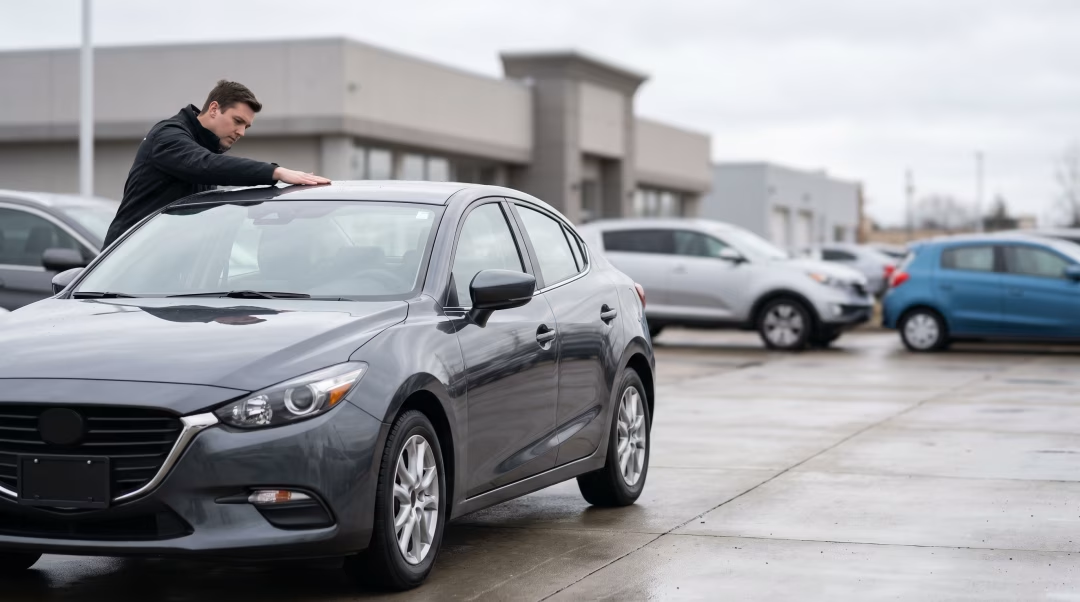
First, use the "touch test." Close your eyes and run your hand flat across the main horizontal surfaces: the hood, the roof, and the trunk lid. These areas bear the brunt of any hailstorm. Your fingertips are incredibly sensitive and can often detect shallow indentations that your eyes might miss. The surface should feel perfectly smooth and uniform.
Next, perform the "sight test." Find a straight line in the background, like the edge of a building, a telephone pole, or the reflection of the overhead lights. Watch that reflection as you walk slowly around the car. If the reflection suddenly becomes distorted, wavy, or broken, you have likely found a dent. Repeat this process for every body panel, including the doors and fenders.
Do not forget the details. Hail can damage more than just the big, flat panels. Carefully inspect the following areas:
- Metal and Plastic Trim: Check the thin metal strips around the windows and the plastic roof moldings. These pieces are often made of softer materials and can be easily pockmarked by hail.
- Glass and Lenses: Look closely at the windshield, windows, and mirrors for any small chips or "bullseye" cracks. Also, inspect the plastic covers on the headlights and taillights for any signs of impact or fractures.
- Side Panels: While less common, severe storms with high winds can cause hail to impact the sides of a car. Use the reflection technique on the doors and quarter panels as well.
Identifying Poorly Repaired Hail Damage
Sometimes, a vehicle will have had its hail damage repaired before being listed for sale. While a quality repair job can be almost undetectable, a poor one can lead to future problems like peeling paint or rust. Knowing how to tell if a car has been repainted is an important skill. Look for signs of a subpar repair:
Check for an inconsistent paint finish. The color or texture might look slightly different from one panel to another. Look for a wavy or bumpy texture in the paint, often called "orange peel," which indicates a non-factory paint job. Also, inspect the edges of panels, window seals, and trim for any signs of overspray. A professional paint job will have clean, sharp lines. In some cases of cheap repair, body filler is used to fill the dents before painting. While hard to spot visually, sometimes a small magnet can help detect areas where thick filler has been applied, as it will not stick as strongly as it does to bare metal.
Using the Vehicle History Report
A vehicle history report can provide valuable clues. If a car sustained severe hail damage, an insurance company may have declared it a total loss, resulting in a "salvage" or "rebuilt" title. This is a major red flag that indicates the damage was extensive. The report might also list comprehensive insurance claims, which can be related to non-collision events like hail. While not every hail claim is reported, the presence of one warrants a much closer inspection of the vehicle's bodywork.
What To Do if You Discover Hail Damage
Finding hail damage does not automatically mean you should walk away from the car. If the damage is minor and purely cosmetic, you can use it as a powerful negotiating tool. Ask for a reduction in price that reflects the diminished value or the potential cost of repair. It is wise to get a quote from a local Paintless Dent Repair (PDR) specialist to understand the true cost of fixing the damage. If the vehicle is priced right and the damage does not bother you, it could be a great way to get an otherwise excellent vehicle for a lower price. The key is to go into the purchase with full knowledge, so you can make an informed decision that you will be happy with for years to come.
Is minor hail damage a big deal on a used car?
Minor, purely cosmetic hail damage may not be a major issue if you are comfortable with the appearance and the price reflects the imperfection. However, it will lower the vehicle's resale value. It is important to have it inspected to confirm there is no related damage, such as cracked paint or damaged seals, which could lead to rust or leaks later on.
Can hail damage be completely fixed?
Yes, in most cases, hail damage can be fixed effectively. The preferred method is Paintless Dent Repair (PDR), where skilled technicians use special tools to gently massage the dents out from the underside of the panel, preserving the factory paint. For more severe damage where the paint is cracked, traditional bodywork and repainting would be necessary.
Does a vehicle history report always show hail damage?
No, a vehicle history report will not always show hail damage. It will only appear if an insurance claim was filed and processed, or if the damage was so severe that the vehicle was given a salvage or rebuilt title. Many owners choose to repair minor hail damage out-of-pocket or not at all, in which case it would not appear on the report.
Will my insurance cover pre-existing hail damage?
No, an auto insurance policy will not cover pre-existing damage. If you buy a car with hail damage and later file a new claim for different damage, the insurance adjuster will document the old damage and subtract its value from any settlement. It can also be difficult to get comprehensive coverage on a vehicle with significant unrepaired damage.
Should I avoid a car with a salvage title from hail?
Exercising extreme caution is recommended. A salvage title means an insurance company determined the cost to repair the hail damage exceeded a large percentage of the car's value. While the car may have been repaired and deemed roadworthy (rebranded as a "rebuilt" title), it can have underlying issues and will be very difficult to insure and resell. A pre-purchase inspection is absolutely essential in this case.
