

How to Tell if Your
Car Needs a Coolant Flush
Understanding Your Car's Cooling System
Your vehicle's engine generates an incredible amount of heat, and the cooling system is its first line of defense against overheating and serious damage. At the heart of this system is coolant, also known as antifreeze, a vital fluid that circulates through the engine to absorb heat and dissipate it through the radiator. Over time, this coolant breaks down, losing its anti-corrosive properties and becoming contaminated with rust, scale, and other debris. When this happens, it can no longer protect your engine effectively. Ignoring the signs of old or depleted coolant can lead to clogs in the radiator, a failed water pump, or even a warped cylinder head, resulting in repairs that are far more costly than routine maintenance. Learning how to tell if your car needs a coolant flush is a key part of responsible vehicle ownership, especially in the demanding Texas climate.
Key Indicators for Coolant Service
Paying attention to your vehicle's performance and appearance can alert you to potential cooling system issues. The most common signs include your temperature gauge reading higher than normal, visible puddles of sweet-smelling green, pink, or orange fluid under your car, or the coolant in the reservoir appearing rusty, cloudy, or sludgy. You might even notice your cabin heater is not blowing warm air. These are not just minor inconveniences; they are direct warnings that your engine's health is at risk. Keep reading to learn more about each symptom in detail.
A Deep Dive into Coolant Health and Maintenance
Your car's cooling system is a complex network of components working in unison to maintain a stable engine operating temperature. Coolant is the lifeblood of this system. It is typically a mixture of ethylene glycol or propylene glycol and water, combined with additives that prevent corrosion, rust, and mineral buildup within the engine block, radiator, and hoses. Its dual-purpose nature is why it is also called antifreeze; it prevents the fluid from freezing in cold weather and from boiling over in extreme heat, like a typical Dallas summer.
However, as this fluid ages, the protective additives are consumed. The chemical composition changes, and it can become acidic, accelerating corrosion of metal parts. Tiny particles of rust and scale flake off and circulate through the system, acting like sandpaper on delicate components like the water pump's seals and bearings. Eventually, these contaminants can form a thick sludge that clogs the narrow passages in the radiator and heater core, severely restricting flow and leading to overheating.
Top Signs It is Time for a Coolant Flush
Your vehicle will almost always give you warning signs before a catastrophic cooling system failure. Recognizing these indicators early can save you from being stranded on the side of the highway and facing a massive repair bill. Here are the most common symptoms to watch for:
- Rising Temperature Gauge: The most obvious sign. If the needle on your dashboard's temperature gauge starts creeping into the red zone or consistently runs hotter than its normal position, it is a clear indication that the cooling system is struggling to dissipate heat.
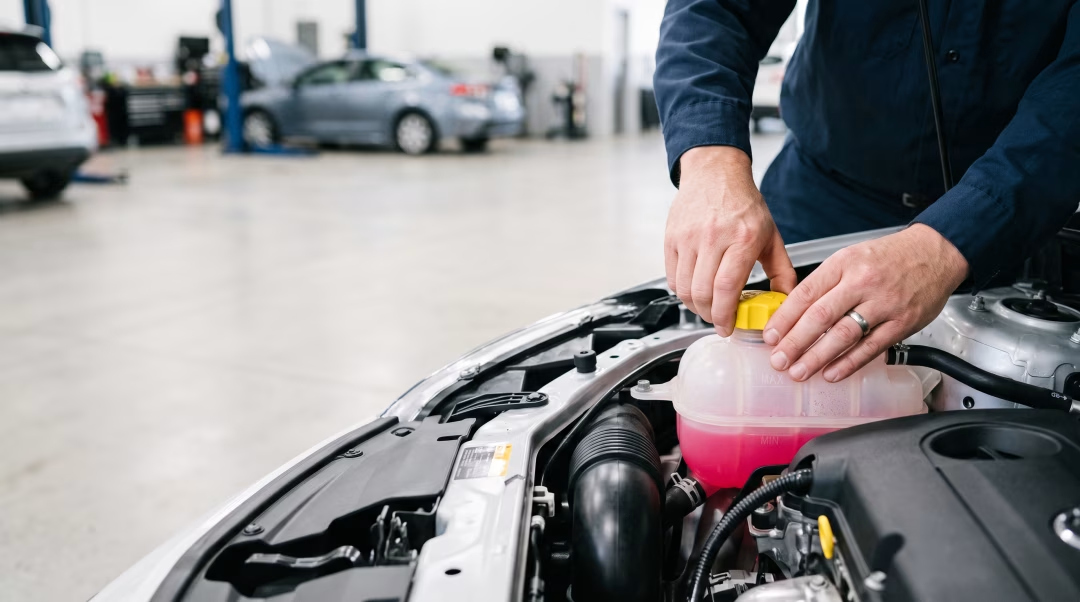
- Discolored or Gritty Coolant: When you check your coolant reservoir (the translucent plastic tank near the radiator), the fluid should be a vibrant green, pink, orange, or yellow. If it looks brown, rusty, or has visible particles floating in it, it is contaminated and needs to be replaced.
- Visible Leaks or Puddles: If you notice brightly colored puddles under the front of your car, you likely have a coolant leak. The fluid has a slightly slimy feel and a distinctively sweet odor. Leaks can come from a cracked hose, a faulty radiator cap, or a failing water pump.
- Poor Heater Performance: The heater in your car uses the hot engine coolant to warm the cabin. If you turn on your heater and only get lukewarm or cool air, it could mean that sludge is clogging the heater core, preventing the hot fluid from circulating properly.
- Dashboard Warning Lights: Many modern cars have a specific low coolant warning light, but an overheating issue can also trigger the generic "Check Engine" light. Never ignore these warnings; they are your car's way of asking for help.
The High Cost of Neglect
Ignoring these symptoms is a gamble. A simple coolant flush is a routine maintenance task with a relatively low cost. However, allowing your engine to overheat can cause severe and permanent damage. The aluminum components in modern engines, particularly cylinder heads, can warp when exposed to excessive heat. This can lead to a blown head gasket, a major repair that involves disassembling a large portion of the engine and can cost thousands of dollars. In a worst-case scenario, the engine could seize completely, requiring a full replacement. Planning for unexpected car repair costs is wise, but preventative maintenance is always the more affordable path.
What a Coolant Flush Actually Entails
It is important to understand the difference between a simple "drain and fill" and a full system "flush." A drain and fill, as the name implies, only removes about 40-50% of the old coolant from the radiator. The rest of the contaminated fluid remains trapped in the engine block, heater core, and hoses. A proper coolant flush is a much more thorough process. A technician will use specialized equipment to connect to your car's cooling system. They will first add a cleaning agent to the old fluid and run the engine to circulate it, breaking down rust and scale deposits. Then, the entire system is flushed with water until it runs clear, removing all the old fluid and contaminants. Finally, the system is filled with the precise mixture of new coolant and water specified by your vehicle's manufacturer.
Service Intervals and Your Next Vehicle
How often should this service be performed? The answer varies by vehicle. Your owner's manual is the best source of information, but a general rule of thumb is every 30,000 to 50,000 miles, or every 3 to 5 years. When you are looking for a reliable pre-owned vehicle, it is important to consider its maintenance history. During a thorough used car test drive, pay close attention to the temperature gauge. At our dealership, we carefully inspect the vital systems of every vehicle in our used inventory. We believe that providing dependable transportation starts with ensuring that critical maintenance, like checking the health of the cooling system, is addressed before the car is offered for sale. If you have questions about a specific vehicle's condition, please do not hesitate to contact us.
What is the difference between coolant and antifreeze?
The terms are often used interchangeably. Antifreeze is the concentrated liquid (usually ethylene glycol) that you buy in a jug. Coolant is the mixture of antifreeze and water (typically a 50/50 ratio) that circulates in your car's cooling system. The water helps with heat transfer, while the antifreeze provides freeze and boil-over protection.
Can I just top off my coolant instead of flushing it?
If your coolant level is slightly low, topping it off with the correct type of coolant is acceptable. However, this does not remove the contaminants and depleted additives from the old fluid. Topping off is a temporary fix for fluid level, not a substitute for a full flush, which is needed to restore the protective properties of the fluid.
What color should my coolant be?
Coolant comes in several colors, most commonly green, orange, pink, or yellow, depending on the type of anti-corrosion technology used. The important thing is that the color should be bright and translucent. If it appears rusty, brown, milky, or has debris floating in it, the system needs to be flushed immediately.
Is it dangerous to drive with low coolant?
Yes, it is very risky. Driving with low coolant can quickly lead to your engine overheating. This can cause severe and expensive damage, such as warped cylinder heads, blown head gaskets, or even complete engine failure. If your temperature gauge enters the red zone, pull over safely as soon as possible and shut off the engine.
Does a coolant flush help the car's air conditioning?
A coolant flush primarily affects the heating system, not the air conditioning. Your car's heater uses hot coolant to warm the cabin, while the A/C is a separate system with its own refrigerant. However, if an overheating engine caused by bad coolant damages other components under the hood, it could indirectly affect A/C performance.
