

Is It Safe to Drive
With Your Check Engine Light On?
That small, amber-colored engine symbol glowing on your dashboard can trigger immediate concern. The check engine light, officially known as the Malfunction Indicator Lamp (MIL), is your car's way of telling you that its onboard computer system has detected a problem. This could be anything from a simple issue, like a gas cap that was not tightened properly, to a more complex engine malfunction. While it is tempting to ignore it and hope it goes away, doing so can lead to more significant and costly problems down the road. Understanding what this light signifies is the first step toward making a smart decision. The urgency of the situation often depends on whether the light is steady or flashing, as well as any other symptoms your vehicle may be exhibiting. Addressing the issue promptly not only protects your car's health but also ensures your safety on the road and can even improve your fuel economy.
Continuing to drive with a solid check engine light might seem harmless if the car feels normal, but it is never advisable to ignore it for long. The underlying problem could be impacting your vehicle's emissions system or engine performance in ways that are not immediately obvious. A flashing light, however, is a clear signal to stop driving as soon as it is safe to do so. This indicates a severe issue that could cause catastrophic damage to expensive components like the catalytic converter. Getting the diagnostic codes read is essential to pinpoint the source of the trouble.
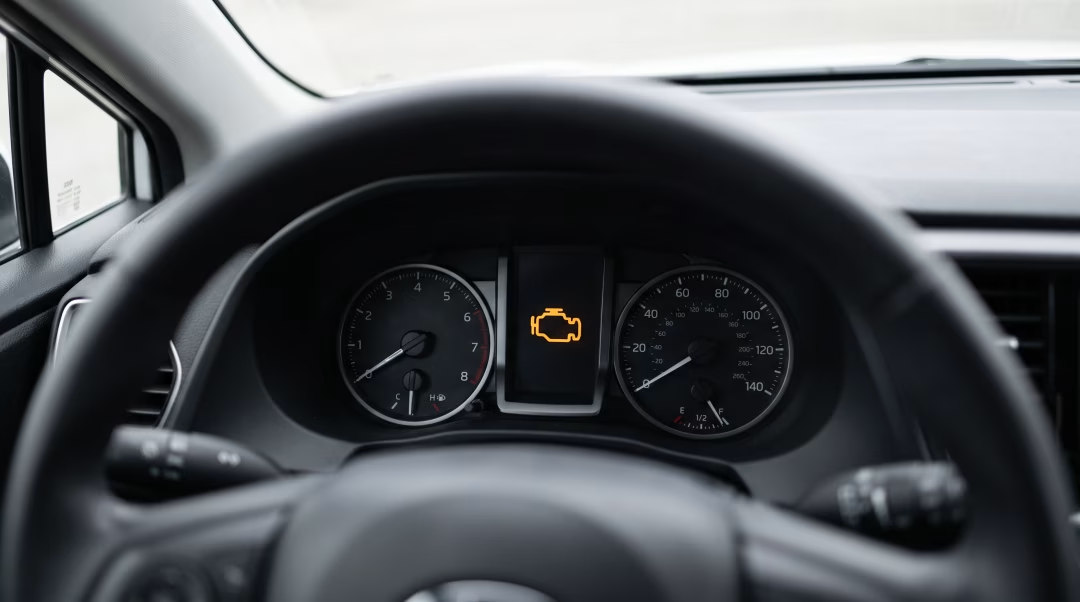
Decoding Your Dashboard: A Deeper Look at the Check Engine Light
Every modern vehicle is equipped with an On-Board Diagnostics system, or OBD-II. This sophisticated network of sensors and computers constantly monitors your car's performance, from engine operation to emissions output. When this system detects a reading that falls outside of the manufacturer's specified range, it stores a Diagnostic Trouble Code (DTC) in its memory and illuminates the check engine light on your instrument panel. This is a general alert, meaning the light itself does not tell you the exact problem, only that one exists. The specific DTC can only be retrieved by plugging a specialized scan tool into the OBD-II port, which is typically located under the dashboard on the driver's side.
Steady vs. Flashing: Not All Warnings Are Created Equal
The behavior of the check engine light provides a crucial clue about the severity of the problem. It is vital to know the difference between a steady light and a flashing one.
A steady check engine light is the most common scenario. It indicates that the OBD-II system has detected a fault that is not an immediate, severe emergency. While you do not need to pull over and call a tow truck right away, you should not ignore it. You can generally continue driving, but it is best to schedule an appointment to have the vehicle diagnosed as soon as possible. Driving for extended periods with a steady light can lead to poor fuel mileage, increased emissions, and the potential for more serious component failures over time.
A flashing check engine light, on the other hand, signals a critical problem that requires your immediate attention. This almost always indicates a severe engine misfire. When a cylinder misfires, unburned fuel is dumped into the exhaust system. This raw fuel can rapidly overheat the catalytic converter to the point of melting, causing permanent and extremely expensive damage. If your check engine light is flashing, you should reduce your speed, pull over to a safe location, and turn off the engine. It is highly recommended to have your vehicle towed to a repair facility rather than attempting to drive it any further.
Common Reasons Your Check Engine Light Is On
While hundreds of potential DTCs could trigger the light, a handful of issues are far more common than others. Here are some of the most frequent culprits:
- Loose or Faulty Gas Cap: This is the simplest fix. A loose cap can disrupt the fuel system's vapor recovery process, triggering a code. Always try tightening your gas cap first; it may take a few drive cycles for the light to reset.
- Failing Oxygen (O2) Sensor: This sensor measures the amount of unburned oxygen in your exhaust. A faulty sensor can't provide the right data to the computer, often leading to decreased fuel economy and increased emissions.
- Worn Spark Plugs or Ignition Coils: Spark plugs ignite the air and fuel mixture in the cylinders. If they are worn or the ignition coils that power them are failing, it can cause an engine misfire, poor performance, and reduced fuel efficiency.
- Failing Catalytic Converter: This expensive component converts harmful carbon monoxide into less harmful emissions. It usually only fails due to another underlying issue, like a bad O2 sensor or spark plugs that were ignored for too long.
- Mass Airflow (MAF) Sensor Issues: The MAF sensor tells the computer how much air is entering the engine. A dirty or failing sensor can cause the engine to run too rich or too lean, affecting performance and potentially damaging other parts.
Trading a Car with an Active Check Engine Light
If you are considering upgrading your vehicle, you might wonder, can you trade in a car with the check engine light on? The answer is yes, you absolutely can. Dealerships are accustomed to accepting trade-ins with a variety of mechanical issues. However, it is important to be realistic about its impact on your vehicle's value. The presence of an illuminated check engine light creates uncertainty. The dealer will have to factor in the potential cost of diagnosing and repairing the issue, which will be reflected in the trade-in offer. Being transparent about the light and any symptoms you have noticed can build trust and streamline the appraisal process. You can get a preliminary idea of your car's worth by using an online tool to value my trade before visiting the dealership.
Ultimately, the check engine light is a vital tool for maintaining your vehicle's health. By understanding what it means and taking the appropriate action, you can prevent minor issues from becoming major repairs. Whether you decide to fix your current car or trade it in for a quality vehicle from our used inventory, addressing that little light is always the right move. If you have any questions, do not hesitate to contact us for guidance.
Can a check engine light turn itself off?
Yes, sometimes it can. If the issue was temporary, such as a loose gas cap that you have since tightened or a one-time engine hiccup due to weather conditions, the system may reset itself after a certain number of successful drive cycles without detecting the fault again.
How much does it cost to diagnose a check engine light?
The cost for a diagnostic check can vary. Many auto parts stores will read the trouble code for free, but this only tells you the code, not the cause. A professional mechanic will typically charge a diagnostic fee to perform a more in-depth analysis to accurately pinpoint the faulty component, which can range from approximately $75 to $150.
Is it okay to drive a short distance with a flashing check engine light?
It is strongly advised not to drive at all with a flashing check engine light, even for a short distance. A flashing light indicates a severe misfire, which can destroy your catalytic converter in just a few minutes of driving. The safest and most cost-effective action is to pull over and have the vehicle towed.
Will a check engine light cause me to fail an emissions test?
In most areas that require emissions testing, an illuminated check engine light is an automatic failure. The light indicates a fault within the engine management or emissions control systems, so the vehicle will not be able to pass the inspection until the underlying issue is repaired and the light is off.
What is the difference between a check engine light and a service required light?
A check engine light (or Malfunction Indicator Lamp) signals a problem detected by the onboard diagnostics system. A "service required" or "maintenance required" light is typically a simple reminder for routine scheduled maintenance, like an oil change or tire rotation, and is not related to a system malfunction.
