

What Happens If Your Car Breaks
Down While You Still Owe Payments?
It is a situation no driver wants to face: your car experiences a major mechanical failure, but your loan payments are still due every month. This scenario can feel overwhelming, leaving you stuck between a costly repair bill and an ongoing financial obligation for a vehicle you cannot even use. The most important thing to understand is that the auto loan and the vehicle's physical condition are two separate issues. Your responsibility to the lender does not stop just because the car does. However, this does not mean you are without options. Navigating this challenge requires a clear understanding of your loan agreement, any existing warranties, and the choices available for repairing, trading, or selling your vehicle. By exploring these paths, you can create a strategy to manage the situation and get back on the road without jeopardizing your financial stability.
Finding yourself with a broken-down car you are still paying for is a true financial bind. The key is to act strategically, not emotionally. Your first move should always be to review all your paperwork, from the financing contract to any service agreements or insurance policies you hold. These documents contain the precise details of your obligations and potential avenues for assistance. Understanding these terms empowers you to make a clear-headed decision about whether to repair the car, trade it in, or pursue another solution.
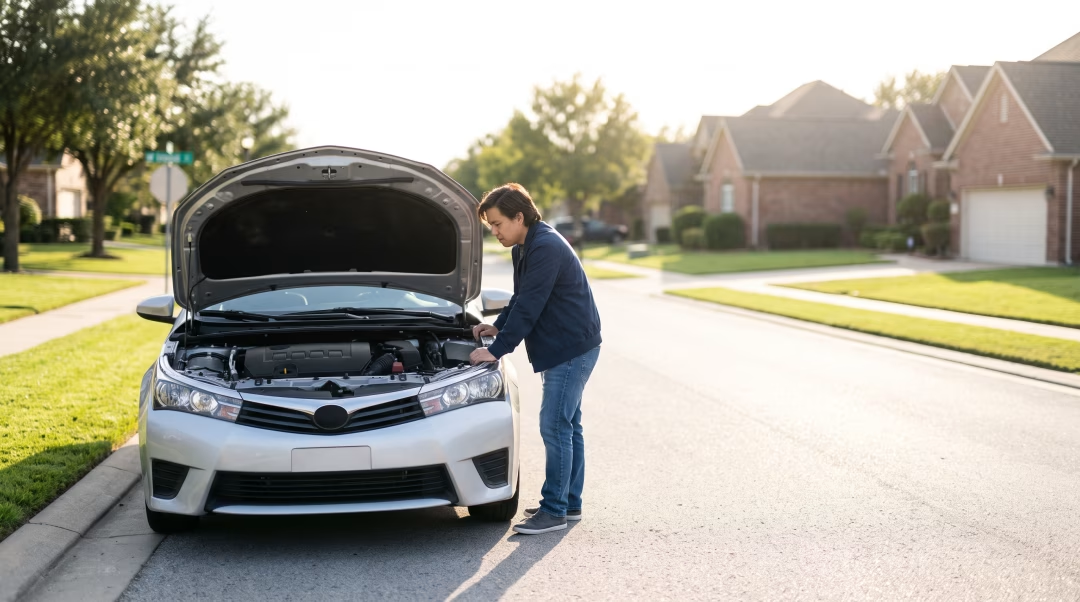
Navigating a Mechanical Breakdown with an Active Auto Loan
When your primary mode of transportation breaks down, the stress is immediate. That stress is magnified when you realize you still have a significant balance on your auto loan. The critical fact to accept upfront is that the loan must still be paid. Your agreement, often called a retail installment contract, is with a lender for a specific amount of money you borrowed. The car serves as collateral for that loan, but the loan's existence is independent of the car's operational status. Stopping payments will lead to serious consequences, including late fees, negative credit reporting that can drop your score significantly, and eventual repossession of the vehicle, even if it is not running.
Your Immediate Action Plan
Before making any major financial decisions, you need to gather information. A calm, methodical approach will serve you best during this stressful time.
- Assess the Vehicle's Condition: The first step is to understand what is wrong and how much it will cost to fix. Have the vehicle towed to a reputable repair shop for a full diagnosis. Getting a detailed, written estimate is crucial. Ask the mechanic about the long-term reliability of the vehicle after the proposed repair. This information is fundamental to your decision-making process. If you need help, you can learn how to find a trustworthy mechanic in Dallas.
- Review Your Paperwork: Locate all the documents from your vehicle purchase. This includes your loan agreement, your insurance policy, and any paperwork for an extended warranty or used car service contract. These documents outline your coverages and obligations. You may have protection you were not aware of that could significantly reduce or eliminate your out-of-pocket repair costs.
- Determine Your Loan Payoff Amount: Contact your lender to get the exact payoff amount for your loan. Do not just look at your last statement, as interest accrues daily. Knowing this figure is essential for evaluating your options. While you are on the phone, it is a good idea to communicate your situation. While they cannot forgive the loan, some lenders may offer a temporary payment deferral if you are facing a short-term hardship.
Evaluating Your Options When Facing a Costly Repair
With the repair estimate and your loan payoff in hand, you can compare your choices. The central question is often whether the repair cost is reasonable relative to the car's value and your remaining loan balance.
Option 1: Repair the Vehicle
If the repair cost is manageable and the car is otherwise in good condition, fixing it is often the most straightforward path. The challenge is paying for the repair. Check if the issue is covered by any existing warranty or service contract. If not, you will need to pay out-of-pocket. If you do not have the cash, you might consider a personal loan or a credit card, but be mindful of the interest rates. This option makes the most sense when the car's value after the repair will be significantly higher than the loan balance.
Option 2: Sell the Car As-Is
You can try to sell the vehicle in its broken state to a private party or a company that buys non-running cars. The sale price will be low, likely much lower than your loan balance. To do this, you would need to pay the difference between the sale price and your loan payoff amount to the lender in order to release the lien and transfer the title to the new owner. This can be a good choice if you have the savings to cover the difference and want a clean break from the vehicle.
Option 3: Trade In the Vehicle
This is a very common solution, especially for those who cannot afford the repair or cover a large loan gap. Many dealerships, particularly those specializing in flexible financing, will accept a vehicle trade-in even if it does not run. You can use our Value My Trade tool to get an initial estimate. The dealership will appraise the car for its salvage or wholesale value and apply that amount to your new purchase. The remaining balance of your old loan, known as negative equity, can often be rolled into the financing for your next vehicle. While this increases the amount you finance, it provides a practical way to solve two problems at once: getting rid of the broken car and securing reliable transportation. This can be an effective way to get out of an upside-down car loan.
Option 4: Voluntary Surrender
This should be considered a last resort. A voluntary surrender, or voluntary repossession, is when you inform the lender you can no longer make payments and will be returning the vehicle. While it may seem better than having the car towed away unexpectedly, it has nearly the same severe negative impact on your credit report as an involuntary repossession. The lender will sell the car at auction for a low price, and you will still be legally responsible for paying the deficiency balance—the difference between the auction price and what you owed. This action will make it much more difficult to secure financing in the future.
The Importance of Communication
Throughout this process, open communication with your lender is key. Never just stop making payments without talking to them first. Informing them of your situation and asking about hardship options like a payment extension shows you are being responsible. It may not solve the underlying problem, but it can prevent late fees and protect your credit score while you work on a more permanent solution. If you are struggling, we invite you to contact our finance team to discuss potential options and see how we can assist you.
Frequently Asked Questions
Do I still have to make my car payments if my car is broken and I cannot drive it?
Yes, absolutely. Your loan agreement is a contract to repay a set amount of money, and it is separate from the car's mechanical condition. Failing to make payments will result in late fees, damage to your credit score, and could lead to repossession, even if the vehicle is inoperable.
Will my car insurance cover a mechanical breakdown?
Typically, no. Standard auto insurance policies like liability, collision, and comprehensive are designed to cover damage from accidents, theft, or weather events, not general mechanical failures from wear and tear. The only exception is if the breakdown was directly caused by a covered event, like engine damage from a collision.
What is the difference between a warranty and an extended service contract?
A manufacturer's warranty is included with a new vehicle and covers defects for a specific period. A used car might be sold "as-is" or with a limited dealer warranty. An extended service contract, which is often purchased separately, is an agreement to cover certain repair costs for a longer term. It is important to read the fine print to see exactly which parts and labor are covered.
Can I trade in a car that does not run and that I still owe money on?
Yes, this is a common solution. Many dealerships will accept a non-running vehicle as a trade-in. They will assess its value and apply it to your transaction. The remaining loan balance (negative equity) can typically be rolled into the financing for your next vehicle, allowing you to get a reliable car and resolve the old loan in one process.
What happens to my loan if my car is totaled in an accident?
If your car is declared a total loss by your insurance company, they will pay you the actual cash value (ACV) of the vehicle. You must use this money to pay off your loan. If the ACV is less than what you owe, you are responsible for the difference. This is where GAP insurance is valuable, as it is designed to cover this exact "gap."
