

What To Do After A Car
Accident In Texas: A Step-by-Step Guide
Experiencing a car accident can be a jarring and stressful event, leaving you feeling overwhelmed and unsure of what to do next. Whether it is a minor fender bender or a more serious collision on a busy Dallas highway, knowing the correct steps to take is crucial for your safety and your financial protection. The moments immediately following a crash are critical. It is important to stay as calm as possible, prioritize safety, and gather the necessary information. This guide provides Texas drivers with a clear, step-by-step checklist to navigate the aftermath of an accident. Following these procedures can help streamline the insurance claim process and protect your rights. Understanding your responsibilities under Texas law and how to properly document the incident will make a significant difference as you work toward getting back on the road. Remember, your immediate well-being is the top priority.
Once you have addressed the immediate situation at the scene, the process of recovery and resolution begins. This involves reporting the accident to the proper authorities, initiating an insurance claim, and getting your vehicle assessed for damages. If your car is declared a total loss, you will face the additional challenge of finding a replacement vehicle. This can be especially difficult if you are dealing with financial strain or credit challenges after the incident. Understanding your options, from dealing with insurance payouts to exploring financing for your next car, is key.
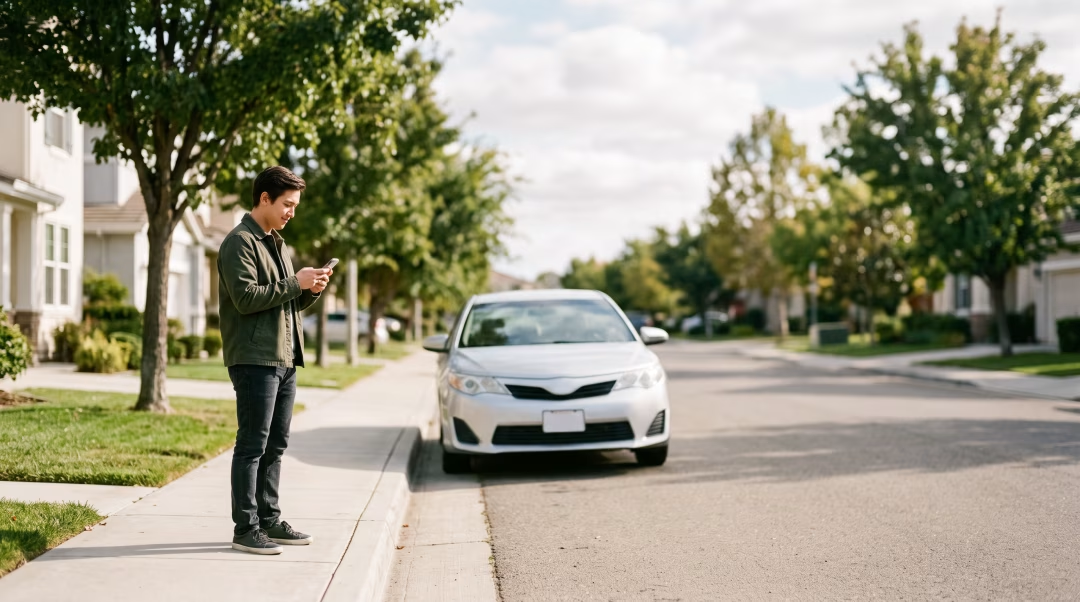
Immediate Steps to Take at the Scene of the Accident
Your actions in the first few minutes after a collision are the most important. Adrenaline and confusion are normal, but trying to maintain a clear head will serve you best. Follow this checklist to ensure you cover all essential steps right after a car accident in Texas.
- Prioritize Safety: First, check yourself and your passengers for injuries. If anyone is hurt, call 911 immediately. If it is safe to do so, move your vehicle out of the flow of traffic to a nearby shoulder or parking lot to prevent further incidents. Turn on your hazard lights to alert other drivers.
- Contact the Police: In Texas, you are required to report any accident that results in injury, death, or apparent property damage of $1,000 or more. Even in minor accidents, a police report provides an official, unbiased record of the event, which is invaluable for insurance claims. When you call, provide your location and a brief description of the situation.
- Exchange Information: Do not admit fault. Simply and calmly exchange essential information with the other driver(s). Be sure to get their full name, address, phone number, driver's license number, license plate number, and insurance company name and policy number. It is a good idea to take a picture of their insurance card and driver's license.
- Document Everything: Use your smartphone to take extensive photos and videos of the scene from multiple angles. Capture the damage to all vehicles involved, the license plates, the positions of the cars, any relevant street signs or traffic signals, and the surrounding area. If there are witnesses, ask for their names and contact information. Their accounts can be very helpful later.
After Leaving the Scene: Reporting and Claims
The process does not end when you drive away. The next phase involves official reporting and communicating with your insurance provider. Acting promptly can help avoid delays and complications.
You should notify your insurance company about the accident as soon as possible, even if you were not at fault. Your policy likely requires you to report any incident in a timely manner. Provide them with all the information you gathered at the scene. Your agent will explain the next steps, which typically involve opening a claim and assigning an adjuster to your case. The adjuster will investigate the accident, review the police report, and assess the damage to your vehicle to determine the extent of the loss.
In addition to the police report filed at the scene, you may also need to file a Texas Driver's Crash Report (Form CR-2), also known as the "Blue Form." You are required by law to submit this form to the Texas Department of Transportation within 10 days of the accident if the police did not file a report and the crash resulted in injury, death, or damage over $1,000. For more information on your responsibilities after a crash, you can always contact us with general questions.
What Happens If Your Car is Totaled?
An insurance adjuster may declare your vehicle a "total loss" if the cost to repair it exceeds its actual cash value (ACV) before the accident. In Texas, this decision is made when repair costs meet or exceed 100% of the vehicle's value. The insurance company will offer you a settlement check for the ACV, minus any deductible on your policy.
It is important to remember that you still have to pay off your loan even if your financed car is totaled. This is where GAP insurance becomes critical. If you owe more on your loan than the car's ACV, you are responsible for the remaining "gap." Without GAP coverage, you could be making payments on a car you no longer own while also needing to finance a new one.
Finding Your Next Vehicle After an Accident
Losing your vehicle in an accident is a major disruption. Suddenly, you need reliable transportation to get to work, run errands, and manage daily life. The financial stress of an unexpected car purchase, especially if you are dealing with a loan deficiency or other post-accident expenses, can be overwhelming. This is where exploring all your options is essential.
If you find yourself in this situation, our team is here to help. We specialize in providing transportation solutions for people facing various financial circumstances. You can browse our used inventory online to see a wide selection of reliable cars, trucks, and SUVs. We understand that credit can be a concern after a major life event, which is why we offer flexible financing options. Our in-house financing programs, often known as Buy Here Pay Here, are designed to look beyond just a credit score. We focus on your current situation and ability to make payments. You can learn more about our approach at our financing area or even get pre-qualified to see what may be possible for you.
Do I have to report a minor car accident in Texas?
Under Texas law, you must report any accident that causes an injury, death, or property damage estimated to be $1,000 or more. Even for minor "fender benders," it is highly recommended to file a police report to create an official record for insurance purposes.
How long do I have to file a car insurance claim in Texas?
While Texas has a two-year statute of limitations for filing a lawsuit for personal injury or property damage, your insurance policy has its own deadlines. Most policies require you to report an accident "promptly" or "as soon as reasonably possible." Waiting too long could give the insurer grounds to deny your claim.
What if the other driver doesn't have insurance?
If you are hit by an uninsured or underinsured driver, your own policy may cover you if you have Uninsured/Underinsured Motorist (UM/UIM) coverage. This is an optional but highly recommended coverage in Texas. If you do not have it, your other option would be to sue the at-fault driver personally, which can be a difficult process.
Can I keep my car if the insurance company declares it a total loss?
Yes, in most cases you can choose to keep the vehicle. The insurance company will pay you the actual cash value of the car minus its salvage value and your deductible. However, the car will be issued a "salvage title," which can make it difficult to register, insure, and resell in the future.
Should I accept the insurance company's first settlement offer?
You do not have to accept the first offer. If you believe the offer for your totaled vehicle or for repairs is too low, you have the right to negotiate. You can provide your own evidence, such as quotes from independent mechanics or valuation reports from reputable sources, to support your claim for a higher amount.
