

Which Used Vehicles Are
Cheapest To Repair Over Time?
When you are shopping for a pre-owned vehicle, the sticker price is only the beginning of the story. The true cost of ownership reveals itself over months and years through factors like fuel, insurance, and especially maintenance and repairs. Choosing a vehicle that is known for being affordable to fix can save you thousands of dollars in the long run and provide invaluable peace of mind. Some cars, trucks, and SUVs have earned a stellar reputation for reliability and low-cost parts, making them a wise investment for budget-conscious drivers. Understanding which models are simpler in design, have readily available components, and are easier for technicians to service is the key to making a smart purchase. This knowledge empowers you to look beyond the initial price and select a car that will be a dependable and economical partner for your daily drives in and around Dallas.
Our team is dedicated to helping you find a vehicle that not only fits your immediate needs but also aligns with your long-term budget. We carefully select our used inventory to include a variety of models known for their dependability and manageable ownership costs. By focusing on quality and value, we aim to provide reliable transportation solutions for our community. Explore our selection and let us assist you in finding a car that you can count on, day in and day out, without the constant worry of expensive repair bills.
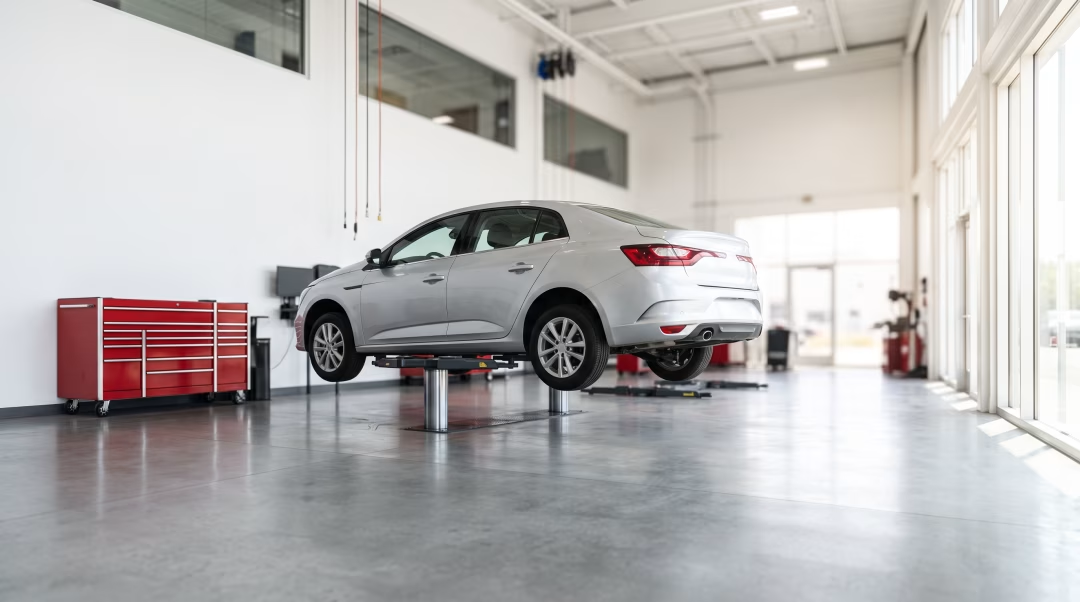
Understanding the True Cost of Vehicle Ownership
The journey of buying a used car often starts with setting a budget for the purchase price. However, savvy buyers know that this is just one piece of the puzzle. The concept of "Total Cost of Ownership" or TCO is a crucial one, as it encompasses every expense you will incur from the day you drive off the lot. While it is easy to focus on the monthly payment, thinking about how to plan for unexpected car repair costs from the start can make a significant difference in your financial health. A car that seems like a bargain upfront could become a financial burden if its parts are rare, its systems are overly complex, or it requires specialized labor for even minor fixes.
Repair costs are influenced by a combination of factors that go far beyond a brand's logo. The key is to look for vehicles that are designed and built with simplicity and serviceability in mind. These are often the models that have been produced in high volumes over many years, creating a robust and competitive market for replacement parts.
Key Factors That Make a Used Car Cheaper to Repair
Not all cars are created equal when it comes to maintenance. Some are engineered for extreme performance, while others are built for pure luxury. The vehicles that typically cost the least to repair are those designed for practical, everyday use. Here is what to look for:
- Widespread Parts Availability: The most popular models from major manufacturers have a huge advantage. Because so many were sold, there is a massive supply of both original equipment manufacturer (OEM) and aftermarket parts. This competition drives prices down, making everything from brake pads to alternators more affordable.
- Simpler Technology: While features like turbocharged engines, complex infotainment systems, and adaptive suspensions are appealing, they add layers of complexity. More components mean more potential points of failure, and these advanced systems often require specialized diagnostic tools and expertise, leading to higher labor costs. Naturally aspirated engines and standard transmissions are often more straightforward to fix.
- DIY and Independent Mechanic Friendliness: Some vehicles are notoriously difficult to work on, with cramped engine bays and components that require special tools to remove. Conversely, many popular domestic and Japanese models are known for being relatively easy to service. This makes them a favorite of independent repair shops, which typically charge less than dealership service centers.
- Proven Reliability Record: A vehicle that breaks down less frequently will naturally be cheaper to own. Brands like Toyota and Honda have built their reputations on decades of producing cars that last. Researching specific model years for common issues is a vital step before making any purchase. A thorough vehicle history report can provide insight into a specific car's past.
Vehicle Categories Known for Lower Repair Costs
While individual models vary, certain classes of vehicles tend to offer more affordable long-term ownership. When browsing our inventory, consider starting your search in these categories:
Compact and Midsize Sedans: This is often the sweet spot for low repair costs. Models like the Toyota Corolla, Honda Civic, Honda Accord, and Toyota Camry are legendary for their reliability. They have been best-sellers for generations, meaning parts are inexpensive and every mechanic knows how to work on them. Many domestic sedans like the Ford Fusion and Chevrolet Malibu also offer practical and affordable maintenance, especially those with non-turbo engine options. You can explore our page on the best used sedans for reliability and low repair costs for more ideas.
Basic Pickup Trucks: While heavy-duty diesel trucks can be expensive to maintain, standard half-ton trucks like the Ford F-150, Chevrolet Silverado 1500, and Ram 1500 (especially with their V6 or non-HEMI V8 engines) are built with durability in mind. Their body-on-frame construction is robust, and their components are designed for work. Because they are the best-selling vehicles in America, the parts market is vast and competitive.
Simple Crossovers and SUVs: The key here is to avoid the luxury segment. Mainstream crossovers like the Honda CR-V, Toyota RAV4, and Ford Escape share many components with their sedan counterparts, which helps keep repair costs down. Their popularity means that, like sedans and trucks, parts are plentiful. It is always wise to compare two used cars by total cost, not just their initial selling price, as a slightly more expensive but more reliable model can be the better financial choice.
Smart Shopping: Due Diligence is Your Best Tool
Finding a vehicle that is cheap to repair involves more than just picking the right model. The specific condition of the car you are considering is paramount. No matter how reliable a model is reputed to be, a poorly maintained example can quickly become a money pit. That is why a pre-purchase inspection is so important. We welcome and encourage you to learn more about why you should get a pre-purchase inspection on a used car. Having an independent mechanic examine the vehicle provides an unbiased assessment of its mechanical health and can uncover potential issues before you sign the paperwork. This step, combined with choosing a model with a reputation for low repair costs, is the most effective strategy for securing affordable and reliable transportation.
At our dealership, we want you to feel confident in your purchase. Our team can walk you through the history and condition of any vehicle on our lot. We believe an informed customer is a happy customer, and we are here to provide the information you need to make the best choice for your budget and lifestyle. Once you have found the right car, our experts in our financing area can discuss options that work for you.
Are older luxury cars a good deal since their prices are low?
While a 10-year-old luxury sedan from a brand like BMW or Mercedes-Benz might have an attractive sticker price, it is often not a good choice for those seeking low repair costs. The parts for these vehicles remain expensive, often costing several times more than comparable parts for a non-luxury brand. Furthermore, their complex electronic and mechanical systems require specialized labor, which significantly increases repair bills.
Do hybrid or electric vehicles have high repair costs?
This is a mixed bag. Hybrids, particularly from Toyota (like the Prius), have proven to be incredibly reliable, and their brake systems often last much longer than those on conventional cars. However, if a major component like the battery pack or inverter fails out of warranty, the replacement cost can be very high. As these vehicles age, it is crucial to have the hybrid system inspected by a qualified technician.
Is a car with a timing chain better than one with a timing belt?
Generally, yes. A timing belt is a maintenance item that must be replaced at regular intervals (typically every 60,000 to 100,000 miles), and the service can be expensive. A timing chain is designed to last the life of the engine and does not require scheduled replacement. While a chain can fail, it is much less common, making cars equipped with them cheaper to maintain in this specific area.
How much does mileage matter versus the car's age?
Both are important, but a well-maintained, high-mileage car is often a better bet than a low-mileage car that has been neglected. Regular use and consistent maintenance, such as oil changes, are key to a vehicle's longevity. Rubber components like hoses and seals can degrade over time regardless of mileage, so a 12-year-old car with 60,000 miles may still need significant work. Always prioritize a vehicle with a verifiable service history.
Are domestic or foreign cars cheaper to repair?
This stereotype has largely faded. Today, the most important factors are the model's popularity and simplicity, not its country of origin. Popular domestic models from Ford, Chevrolet, and Ram are often very affordable to repair due to massive parts availability. Similarly, high-volume models from Japanese brands like Toyota and Honda are also inexpensive to maintain. It is better to compare specific models rather than generalize by brand origin.
