

Why Some Used Cars Hold
Their Value Better Than Others
When you are shopping for a pre-owned vehicle, the sticker price is just one part of the financial equation. A car's ability to retain its value, often called its resale value, is a crucial factor that affects your long term cost of ownership. This is the concept of depreciation: the difference between what you pay for a car today and what it will be worth when you decide to sell or trade it in later. But why do some cars seem to defy this downward trend, holding their value remarkably well, while others depreciate much more quickly? The answer is a complex mix of brand reputation, reliability, market demand, and even the specific features and color of the vehicle. Understanding these factors can empower you to make a smarter purchase, selecting a car that not only meets your immediate needs but also proves to be a wiser financial choice down the road. Explore our used inventory to see a wide selection of quality vehicles.
Navigating the world of used cars can feel overwhelming, but knowledge is your best tool. By learning what makes a vehicle a strong long-term asset, you are better equipped to identify a great deal. This insight helps you look beyond the initial price tag and consider the total value you will receive over the life of the car. Making an informed decision now can lead to significant savings and a more satisfying ownership experience when it is time for your next vehicle.
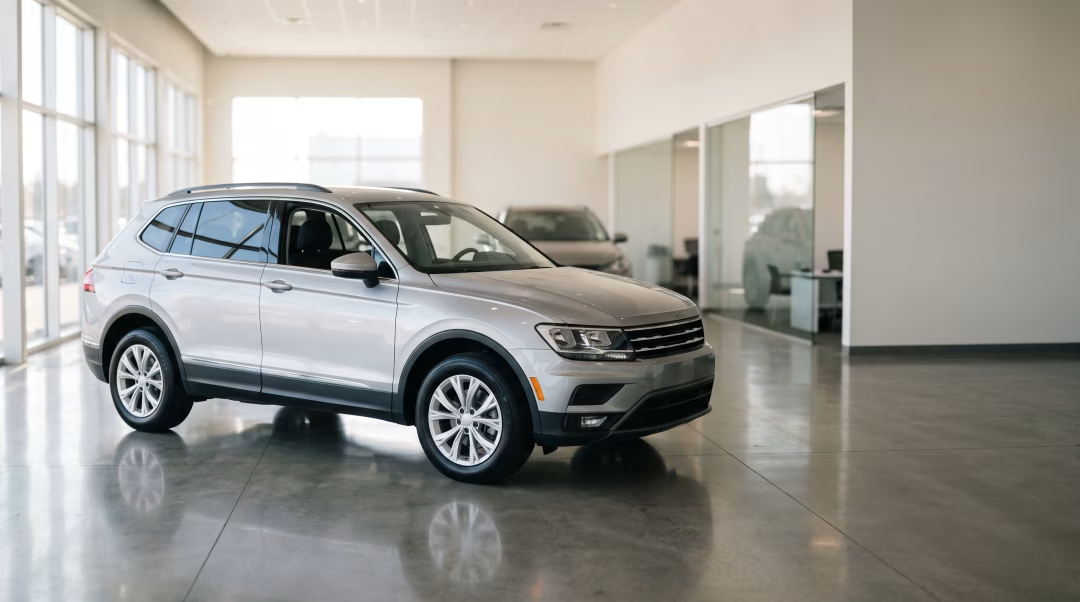
The Key Factors Influencing a Used Car's Resale Value
Depreciation is the single largest cost of owning a vehicle, yet it is often the most overlooked. Every car buyer understands that a vehicle loses value over time, but the rate of that loss varies dramatically from one model to another. A vehicle that holds its value better means you will recoup more of your initial investment when you trade it in or sell it. Let's delve into the core elements that determine why some pre-owned vehicles are champions of value retention.
Brand Reputation and Reliability
This is arguably the most significant factor. Brands with a long-standing reputation for building durable, reliable, and dependable vehicles consistently top the resale value charts. Manufacturers like Toyota, Honda, and Subaru have spent decades cultivating an image of quality. Buyers are willing to pay more for a used vehicle from these brands because they associate them with lower long-term maintenance costs and fewer unexpected breakdowns. A car that is known to last for 200,000 miles or more with regular maintenance will always be in higher demand than one with a reputation for costly repairs after 100,000 miles. This perception of reliability creates a loyal following and a strong secondary market, keeping resale values high.
Supply, Demand, and Body Style
Basic economics plays a huge role in the automotive world. The popularity of a specific vehicle type directly impacts its value. In recent years, consumer preference has heavily shifted towards SUVs, crossovers, and pickup trucks. This high demand, coupled with their inherent utility and versatility, means they tend to depreciate slower than traditional sedans or coupes. A family-friendly three-row SUV or a rugged half-ton pickup truck is often more sought after in the used market than a compact sedan, simply because more people are looking for them. Conversely, models that were discontinued or sold in low numbers can sometimes become rare and hold their value, but more often, a lack of popularity leads to faster depreciation due to a smaller pool of interested buyers.
Condition, Mileage, and Vehicle History
A car's specific history is paramount. Two identical cars from the same year can have vastly different values based on their condition and mileage. Lower mileage is almost always better, as it suggests less wear and tear on the engine, transmission, and other major components. A clean, well-maintained vehicle with no history of major accidents will command a premium. A detailed vehicle history report showing regular oil changes and timely service is a massive plus. Visible signs of neglect, such as dents, scratches, a worn interior, or rust, will significantly decrease a car's worth. Before making a decision, it's always a good idea to schedule a test drive to assess the vehicle's current condition for yourself.
Fuel Efficiency and Maintenance Costs
The ongoing cost of ownership is a major consideration for savvy used car buyers. Vehicles known for their excellent fuel economy are particularly desirable, especially when gas prices are high. A car that saves its owner money at the pump every week is a more attractive long-term proposition. Similarly, models with readily available and affordable parts and simple maintenance procedures hold their value better than complex, high-performance, or luxury vehicles that require specialized service and expensive components. Researching the true monthly cost of owning a used car can provide valuable insight into which models are more budget-friendly over time.
Features, Options, and Color
While not as critical as reliability or condition, certain features can bolster a car's resale value. Desirable options like all-wheel drive (especially in regions with inclement weather), advanced safety features (like blind-spot monitoring), and modern infotainment systems (with Apple CarPlay and Android Auto) can make a used car more appealing. Even color plays a part. Neutral colors like white, black, silver, and gray have the broadest appeal and tend to retain value better than bold or unusual colors like bright yellow or purple, which might appeal to a smaller segment of buyers. Extreme modifications or customizations can also negatively impact value, as they narrow the pool of potential new owners.
Making a Smart Investment in Your Next Vehicle
When you are ready to purchase your next vehicle, think like an investor. Consider how your choice today will impact your finances in the future. By prioritizing models known for reliability, low maintenance costs, and strong market demand, you are setting yourself up for success. If you are thinking about your current vehicle's worth, you can use our online tool to value my trade. Understanding these principles helps you choose a car that you will not only love to drive but one that also protects your hard-earned money. For questions about financing your next purchase, our financing area has a wealth of information. Our team is always here to help you navigate the options and find the perfect vehicle for your needs and budget. Feel free to contact us with any questions.
Why do trucks and SUVs often hold their value well?
Trucks and SUVs typically retain their value better than sedans due to high consumer demand and their versatility. Their ability to handle various tasks, from hauling cargo and towing trailers to accommodating large families and navigating diverse weather conditions, makes them highly sought after in the used market. This sustained popularity means there is a larger pool of potential buyers, which helps keep their resale values strong.
How much does mileage affect a used car's value?
Mileage is one of the most significant factors in determining a used car's value. Generally, the lower the mileage, the higher the value. An average of 12,000 to 15,000 miles per year is considered typical. A vehicle with significantly lower than average mileage for its age will command a higher price, as it implies less wear on its mechanical components. Conversely, high mileage will reduce its value, even if the car is in excellent cosmetic condition.
Does the color of a car really impact its resale value?
Yes, color can have a measurable impact on a car's resale value. Neutral colors such as white, black, silver, and gray have the widest appeal and tend to hold their value best because they are always in demand. Bolder, more vibrant colors like orange, yellow, or purple can be harder to sell as they appeal to a much smaller group of buyers, which can lead to faster depreciation.
Are older luxury cars a good value?
While an older luxury car can be purchased for a fraction of its original price, it may not represent a good value in the long run. Luxury vehicles often experience rapid depreciation due to high initial prices and the complexity of their technology. Furthermore, their long-term maintenance and repair costs are typically much higher than those for non-luxury brands, which can quickly erase any initial savings.
How can I check a used car's vehicle history?
You can check a used car's history by obtaining a vehicle history report from services like CarFax or AutoCheck. These reports use the car's Vehicle Identification Number (VIN) to provide detailed information about its past, including accident history, service records, title information (such as salvage or flood damage), and the number of previous owners. Reviewing this report is a critical step before purchasing any pre-owned vehicle.
