

How Summer Heat Affects Your
Tire Pressure and Blowout Risk
As temperatures climb, especially during a scorching Texas summer, the air inside your tires expands. This simple act of physics can have a significant impact on your vehicle's safety and performance. Every ten-degree change in ambient temperature can cause your tire pressure to fluctuate by about one PSI (pound per square inch). While that might not sound like much, a summer heatwave can dramatically increase the pressure in your tires, pushing them beyond their recommended inflation levels. This condition, known as over-inflation, reduces the amount of tire tread making contact with the road, leading to decreased traction, uneven wear, and a harsher ride. More importantly, it places immense stress on the tire's structure. When combined with pre-existing damage or wear, this added pressure significantly elevates the risk of a sudden and dangerous tire blowout, a scenario every driver wants to avoid on a busy highway.
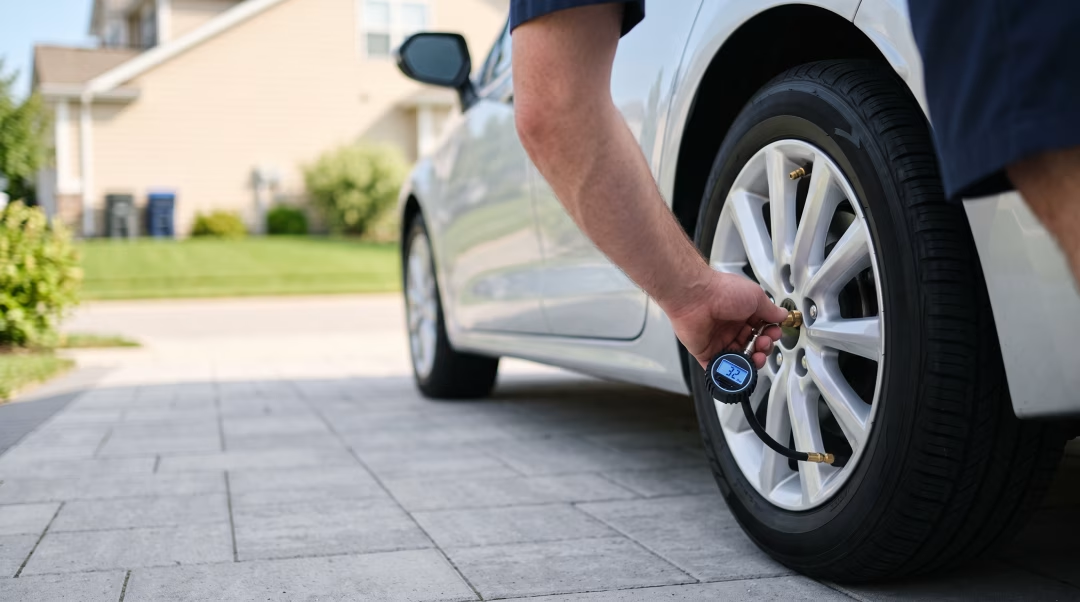
Understanding this relationship between heat and your tires is the first step toward proactive vehicle care. A few moments spent checking your tire pressure, especially before a long drive or during a heatwave, can make all the difference. Properly inflated tires are crucial not only for safety but also for fuel efficiency and extending the life of your tires. This simple maintenance task is one of the most effective ways to protect your investment and, more importantly, yourself and your passengers on the road.
The Science Behind Heat and Tire Pressure
The connection between temperature and pressure is a fundamental principle of science. You might remember it from a high school chemistry class, but it has very real-world applications for every driver. The concept is governed by what is known as the Ideal Gas Law, which states that the pressure of a gas is directly proportional to its temperature when the volume is constant. In simpler terms, as you heat the air molecules inside your tire, they start to move faster and collide with the inner walls of the tire more forcefully and frequently. This increased force is what we measure as tire pressure.
Imagine your tire as a fixed container. The amount of air inside doesn't change, but its energy level does. On a cool morning, the air molecules are less energetic, resulting in a lower pressure reading. As the sun beats down on the black asphalt and the ambient temperature rises, the air inside heats up. The pavement itself can be 40-60 degrees hotter than the air, transferring a massive amount of thermal energy directly to your tires. Friction from driving adds even more heat to the equation. This combined effect causes the pressure to climb steadily. A tire properly inflated to 35 PSI at 70 degrees could easily reach 40 PSI or higher on a 100-degree day after driving on the highway, pushing it into the danger zone for over-inflation.
The Dangers of Under-inflation in the Heat
While over-inflation from ambient heat is a concern, a far more common and dangerous problem is starting with an under-inflated tire. It might seem counterintuitive, but an under-inflated tire is at a much greater risk of a heat-related blowout. When a tire doesn't have enough air pressure, its sidewalls flex excessively with every rotation. This constant, exaggerated bending and unbending generates an incredible amount of internal friction and heat. The tire is essentially working much harder than it was designed to.
On a hot day, this internally generated heat is compounded by the high ambient and road surface temperatures. The tire has no way to cool down effectively. This extreme heat can cause the rubber compounds to break down and the internal structure, including the steel and fabric belts, to separate. The air pressure then builds rapidly inside the weakened tire until it fails catastrophically, resulting in a blowout. Many highway blowouts attributed to "heat" are actually caused by this deadly combination of under-inflation and hot weather. Checking your pressure regularly is the best defense against this preventable failure. For more details on what to look for, you can learn how to check tire condition on used car with our helpful guide.
Warning Signs of a Potential Tire Problem
Your vehicle will often give you clues that a tire is in trouble before it fails completely. Being aware of these signs and acting on them immediately can prevent a dangerous situation. Pay close attention to how your car looks, sounds, and feels.
- Visual Bulges or Cracks: Inspect your tire sidewalls regularly. A visible bulge or blister indicates that the internal structure of the tire has been compromised, and air is pushing against the outer rubber layer. This is a tire on the verge of failure.
- Increased Vibration: If you feel a new or worsening vibration through the steering wheel or the seat, it could be a sign of tire separation or a developing bubble. The vibration will often get worse as you increase your speed.
- Audible Thumping or Clicking: A repetitive thumping or slapping sound that correlates with your speed often points to a flat spot or a separation in the tire's tread. Pull over safely as soon as possible to inspect it.
- Vehicle Pulling: A car that suddenly starts to pull strongly to one side can be a symptom of a rapidly deflating tire.
How to Safely Handle a Tire Blowout
A tire blowout can be a startling experience, but knowing the correct steps to take can help you maintain control and bring your vehicle to a safe stop. The key is to remain calm and avoid sudden, jerky movements.
First, do not slam on the brakes. This is a natural instinct, but it can cause the vehicle to swerve or spin out of control. Instead, grip the steering wheel firmly with both hands to counteract the pull from the failed tire. Gently ease your foot off the accelerator pedal, allowing the car to slow down gradually on its own. Focus on steering straight ahead as much as possible. Once the vehicle has slowed to a manageable speed (around 25-30 mph), you can begin to apply the brakes lightly. Look for a safe place to pull over, completely off the roadway if possible. Turn on your hazard lights to alert other drivers. Knowing what to do if your car breaks down on highway can prepare you for this and other unexpected events.
Driving on reliable transportation is essential, especially for those with long commutes. When considering your next vehicle, think about models known for their dependability. We have some suggestions for the best used cars for long highway commutes in North Texas that can provide peace of mind.
How often should I check my tire pressure in the summer?
During hot summer months, it is a good practice to check your tire pressure at least once every two weeks, and always before a long road trip. Temperature fluctuations can have a daily impact, so more frequent checks are better than less frequent ones.
Where do I find the correct PSI for my car's tires?
The correct tire pressure specification for your vehicle is not on the tire itself. It is located on a sticker inside the driver's side door jamb, in your owner's manual, or sometimes inside the glove box door. The pressure listed on the tire's sidewall is the maximum cold pressure the tire can hold, not the recommended operating pressure for your specific vehicle.
Should I let air out of my tires on a hot day?
No, you should not let air out of a hot tire. The recommended PSI is for a "cold" tire, meaning one that has not been driven for at least three hours. Tire pressure naturally increases as it heats up from driving and ambient temperature. This increase is expected and accounted for by vehicle manufacturers. Letting air out of a hot tire will result in it being dangerously under-inflated once it cools down.
Does nitrogen-filled tires prevent pressure changes in heat?
Tires filled with nitrogen are slightly less susceptible to pressure changes than those filled with standard air because nitrogen is a larger molecule and is less prone to escaping through the rubber. However, they are not immune to the laws of physics. Nitrogen will still expand when heated, and pressure will still increase. While it may offer a marginal benefit in pressure stability, it is not a substitute for regular pressure checks.
Can old tires increase my risk of a blowout in the heat?
Absolutely. As tires age, the rubber compounds become dry and brittle, developing tiny cracks in the surface and sidewall. This process, known as dry rot, weakens the tire's structure. When the pressure inside the tire increases due to heat, this weakened structure is far more likely to fail. Most experts recommend replacing tires that are six to ten years old, regardless of how much tread is left.
