

How to Protect Your
Car From Theft in Dallas
Owning a vehicle in a bustling metroplex like Dallas offers incredible freedom, but it also comes with the responsibility of keeping your investment safe. Unfortunately, vehicle theft is a persistent issue that affects communities across North Texas. Understanding the risks and taking proactive steps is the best defense against becoming a statistic. Thieves often look for easy targets, vehicles left unlocked, valuables in plain sight, or cars parked in isolated, poorly lit areas. By adopting a few simple habits and considering some modern security solutions, you can significantly lower the odds of your car being targeted. This guide is designed to provide Dallas-area drivers with practical, effective strategies to protect their vehicles. Securing your car is about more than just protecting property; it is about safeguarding your daily routine, your peace of mind, and your ability to get where you need to go. While no single method is foolproof, a layered approach to security creates a powerful deterrent.
Losing a vehicle to theft can be a deeply disruptive and stressful experience, impacting everything from your commute to your family's schedule. If you find yourself in this difficult situation, remember that getting back on the road is possible. Having a plan and knowing your options is the first step toward recovery. We understand the urgency of replacing a stolen vehicle and can help you explore dependable transportation choices that fit your needs and budget. You can browse our current used inventory online at any time.
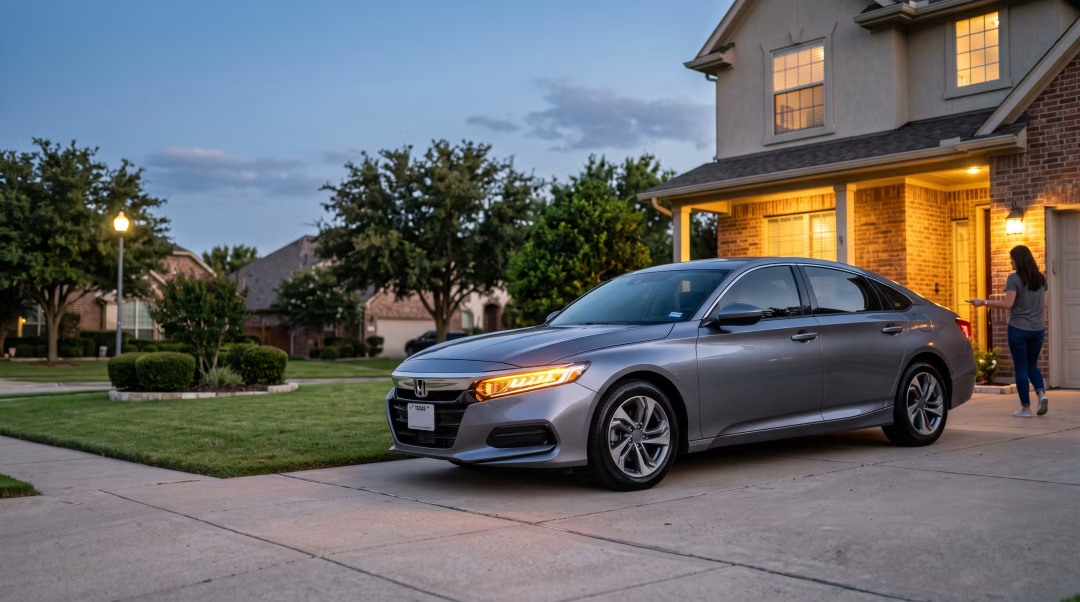
Layering Your Vehicle's Security: A Comprehensive Dallas Guide
In a dynamic city like Dallas, vehicle security is not about a single lock or alarm; it is about creating multiple layers of protection that make a thief's job as difficult and time-consuming as possible. The more obstacles you put in their way, the more likely they are to move on to an easier target. This strategy combines common-sense habits, physical deterrents, and modern technology to form a robust defense for your car. Let's break down these layers, starting with the foundational practices that cost nothing but can make a huge difference.
The Basics: Simple Habits with a Big Impact
These fundamental steps are your first line of defense. They are easy to incorporate into your daily routine and form the bedrock of any effective anti-theft strategy. Thieves are opportunists, and denying them an easy opportunity is often the most effective deterrent.
- Always Lock Your Doors: This may seem obvious, but a surprising number of vehicle thefts occur simply because the doors were left unlocked. Make it a habit to lock your car every single time you exit, even if you are just running into a store for a minute or parking in your own driveway.
- Take Your Keys: Never leave your keys or key fob inside the vehicle, not even in a "hidden" spot like the glove box or center console. Modern push-to-start vehicles are particularly vulnerable if the fob is left inside, as it allows a thief to simply start the car and drive away.
- Hide Your Valuables: Laptops, backpacks, shopping bags, phones, and even loose change can attract unwanted attention. If you must leave items in your car, secure them in the trunk or place them out of sight before you arrive at your destination. A thief who sees something valuable is more likely to risk a break-in.
- Close All Windows: Ensure all windows and the sunroof are completely closed before you leave your vehicle. Even a small opening can be exploited by a thief to gain entry.
Strategic Parking: Where You Leave Your Car Matters
Your choice of parking spot can be as important as locking your doors. Thieves prefer to work in the shadows, where they are less likely to be seen. Choosing your parking location wisely, both at home and when you are out, can dramatically reduce your vehicle's risk profile.
At home, a garage is the most secure option. If you do not have a garage, a well-lit driveway is the next best choice. Consider installing motion-sensor lighting to illuminate the area around your car. When parking in public, always opt for well-lit, high-traffic areas. The presence of other people and good visibility are natural deterrents. Parking lots with security cameras or on-site attendants are also excellent choices. Avoid parking in isolated corners of lots, near large objects that block visibility (like dumpsters), or on dimly lit side streets. When possible, park in a location where your car is visible from a nearby window of a store or restaurant you are visiting.
Physical and Electronic Anti-Theft Devices
Adding physical and electronic deterrents is the next layer of your security strategy. These devices make the process of stealing a car more difficult, noisy, and time-consuming. Many also serve as a strong visual warning to thieves that your vehicle is not an easy target.
- Steering Wheel Locks: Highly visible and effective, a sturdy steering wheel lock (like The Club) prevents the wheel from being turned, making the car undrivable. Its bright color is an immediate visual deterrent.
- Brake and Pedal Locks: These devices lock the brake or clutch pedal in place, rendering the car inoperable.
- Audible Car Alarms: Most modern vehicles come with factory-installed alarms. If yours does not, an aftermarket system can be a worthwhile investment. The loud siren draws attention, which is something no thief wants.
- Immobilizers and Kill Switches: An immobilizer is an electronic device that prevents the engine from starting unless the correct key or fob is present. A kill switch is a hidden switch that must be activated to start the car, disrupting the flow of electricity or fuel.
- VIN Etching: Etching your Vehicle Identification Number (VIN) onto the windows and major parts makes the car less attractive to thieves who intend to sell the parts, as they are easily traceable.
High-Tech Solutions: GPS Tracking and Recovery
For the ultimate layer of protection, consider a vehicle recovery system. These systems use GPS technology to track your vehicle's location in real-time. If your car is stolen, you can provide law enforcement with its exact location, significantly increasing the chances of a quick recovery. While these systems often involve an installation cost and a subscription fee, they can provide invaluable peace of mind. Some advanced systems even allow you to set "geofences" that alert you if your car moves outside a designated area and may enable remote engine disabling. It is important to understand what happens to your car loan if your car is stolen, as you are still responsible for the payments. You can learn more by reading our article about what happens to a car loan if the car is stolen.
Protecting Against Catalytic Converter Theft
Catalytic converter theft is a rampant problem in Dallas and across the country. These devices are part of your vehicle's exhaust system and contain precious metals that thieves sell for a quick profit. The theft can happen in minutes and leave you with a costly repair bill. Trucks and SUVs are often targeted because their higher ground clearance makes the converters easier to access. For more detailed prevention tips, check out our guide on how to protect your catalytic converter. Key strategies include parking in a garage or well-lit area, installing a catalytic converter shield or cage, and etching your VIN onto the converter itself to make it traceable.
What to Do If Your Car Is Stolen
Despite your best efforts, theft can still occur. If you discover your vehicle is missing, act quickly. First, confirm it was not towed. If you are certain it was stolen, immediately file a report with the Dallas Police Department. You will need your license plate number, VIN, and a detailed description of your vehicle. Next, contact your insurance company to start the claims process. If you have a GPS tracking system, notify the service provider so they can begin tracking. Dealing with the aftermath of a stolen vehicle can be daunting, but resources are available. Our team has experience helping customers who are buying a car after their old one was stolen and can guide you through the process of finding and financing a reliable replacement.
Which cars are most frequently stolen in Dallas?
Full-size pickup trucks, like the Ford F-150 and Chevrolet Silverado, are consistently among the most stolen vehicles in Texas. Older model sedans such as the Honda Accord and Toyota Camry are also common targets due to the high demand for their parts and the relative ease of theft compared to newer, more technologically advanced models.
Will my auto insurance cover a stolen car?
Whether your insurance covers theft depends on your policy. You must have comprehensive coverage for your policy to cover a stolen vehicle. Liability-only insurance, the state minimum requirement, does not cover theft. It is crucial to review your policy or speak with your agent to understand your coverage.
Are aftermarket alarms better than factory alarms?
While factory alarms provide a good baseline of security, high-quality aftermarket systems can offer more advanced features. These may include shock sensors, glass-break sensors, two-way remotes that alert you of a breach, and integration with GPS tracking. A visible sticker indicating an aftermarket alarm can also be an extra deterrent.
How can I make my key fob more secure?
Thieves can use "relay attacks" to capture the signal from your key fob, even from inside your house. To prevent this, you can store your key fob in a signal-blocking pouch, often called a Faraday bag, when you are at home. This blocks the radio signal and prevents thieves from amplifying it to unlock and start your car.
What should I do if I see someone suspicious near my car?
Your personal safety is the top priority. Do not confront the individual directly. From a safe distance, try to get a description of the person and any vehicle they are with. Call 911 immediately and report the suspicious activity, providing your location and a clear description of what you are observing. Let law enforcement handle the situation.
