

What Are the Minimum
Car Insurance Requirements in Texas?
Understanding the minimum car insurance requirements in Texas is a crucial step before you get behind the wheel of your next vehicle. The Lone Star State requires every driver to carry a basic level of liability coverage to ensure financial responsibility in the event of an accident. This foundational insurance, often referred to as 30/60/25 coverage, is the legal minimum you must have to operate a vehicle on public roads. It's designed to cover the costs of injuries and property damage you may cause to others. While this meets the state's legal mandate, it is important to know that this base coverage does not pay for damage to your own car or your own injuries. As you browse our used inventory, remember that securing the right insurance is just as important as choosing the perfect car, truck, or SUV for your needs.
Navigating Texas insurance laws ensures you are not only compliant but also protected. The state's requirements are in place to safeguard all drivers on the road, creating a system of accountability. When you finance a vehicle, the insurance requirements often go beyond the state minimum. This is because the lender has a financial stake in the car until the loan is fully paid. Understanding these distinctions between state law and lender requirements will help you prepare for the total cost of ownership and make a well-informed decision when you are ready to schedule a test drive.
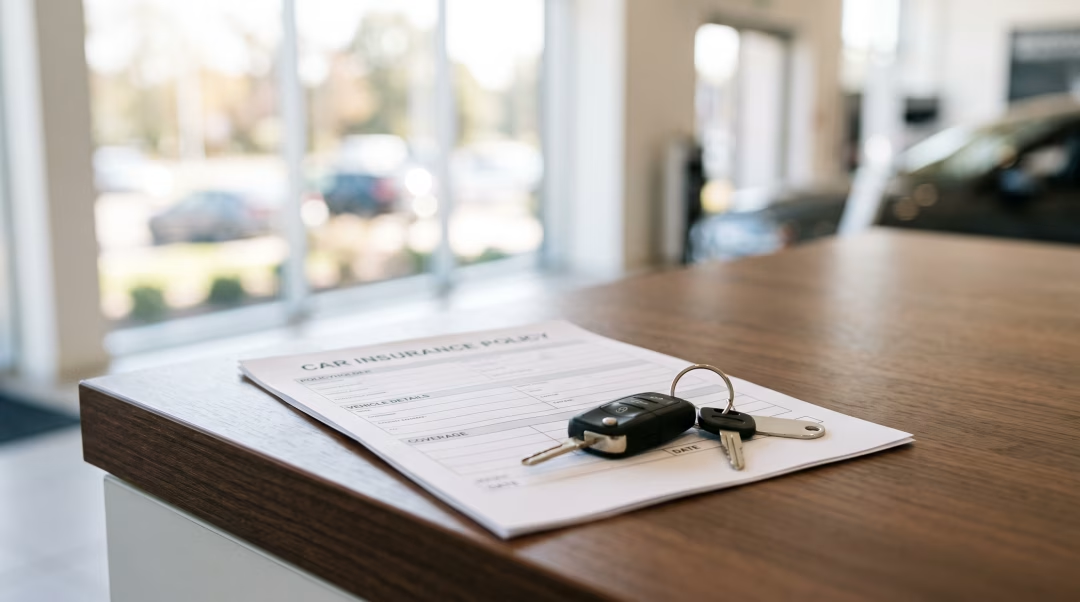
A Deep Dive into Texas Auto Insurance Laws
Driving in Texas comes with the responsibility of being financially prepared for the unexpected. The state mandates that all drivers carry a minimum amount of liability auto insurance. This isn't just a suggestion; it's the law. This requirement ensures that if you are at fault in an accident, there is a financial safety net to cover the damages and injuries sustained by the other party. Before you can drive your newly purchased vehicle home, you must provide proof of insurance that meets these state-mandated minimums. Let's break down exactly what that entails and why it's so important for every driver in the Dallas area and beyond.
Understanding the "30/60/25" Liability Rule
The cornerstone of Texas car insurance is the 30/60/25 rule. This is the minimum liability coverage you must carry. It is essential to understand that liability insurance covers damages to others; it does not cover you, your passengers, or your vehicle. The numbers represent specific dollar amounts for different types of damage.
- $30,000 in Bodily Injury Liability (BI) per person: This is the maximum amount your insurance will pay for a single person's injuries in an accident where you are at fault.
- $60,000 in Bodily Injury Liability (BI) per accident: This is the total maximum amount your policy will pay for all injuries in a single accident you cause, regardless of how many people are hurt.
- $25,000 in Property Damage Liability (PD) per accident: This is the maximum amount your insurance will pay for any property you damage in an at-fault accident. This most commonly applies to the other driver's vehicle but can also include things like fences, mailboxes, or buildings.
While meeting this 30/60/25 requirement makes you a legal driver, it's often not enough to fully cover the costs of a serious accident. Modern vehicles are expensive to repair, and medical costs can quickly exceed these minimum limits, potentially leaving you personally responsible for the remaining balance.
Coverage Options Beyond the State Minimum
Because the state minimums can be insufficient, and because they offer no protection for your own vehicle, most drivers and all lenders require additional coverage. Understanding these options allows you to build a policy that truly protects you and your investment.
- Collision Coverage: This pays to repair or replace your own vehicle after a collision with another object (like a car, pole, or guardrail), regardless of who is at fault.
- Comprehensive Coverage: This covers damage to your car from non-collision events. Think of it as protection from theft, vandalism, fire, falling objects, and weather-related events like hail. Understanding this is crucial, especially if you ever need to trade in a car with hail damage.
- Personal Injury Protection (PIP): Texas law requires insurers to offer PIP coverage, though you can reject it in writing. It helps pay for medical expenses and lost wages for you and your passengers after an accident, no matter who was at fault.
- Uninsured/Underinsured Motorist (UM/UIM): This vital coverage steps in if you are hit by a driver who has no insurance or not enough insurance to cover your medical bills and vehicle repairs. You can learn more about what uninsured motorist coverage is and if you need it in Texas on our blog.
Why Financed Cars Require More Insurance
If you are planning to finance your vehicle, which is a common path for many of our customers, you will need more than the state minimum insurance. When you take out a loan, the vehicle serves as collateral. The lender, or lienholder, has a financial interest in the car until the loan is paid in full. To protect that interest, lenders will almost universally require you to carry both Collision and Comprehensive coverage, often referred to as "full coverage." This ensures that if the car is damaged or totaled in an accident, fire, or theft, there are funds available to repair or replace it, protecting both you and the lender from a significant financial loss. This is a standard practice across the industry, including for those exploring our financing area for options.
The Consequences of Driving Uninsured in Texas
The risks of driving without insurance in Texas are severe and extend far beyond the potential costs of an accident. The state takes a hard line on uninsured motorists, and the penalties can have a lasting impact on your finances and your driving privileges.
For a first-time offense, you can face a fine ranging from $175 to $350, plus court costs. For subsequent offenses, the fines increase significantly, potentially reaching up to $1,000. In addition to fines, your driver's license can be suspended, and your vehicle could be impounded, leading to towing and storage fees that add up quickly. To get your license reinstated, you may be required to file an SR-22 certificate with the state, which is a form your insurer files to prove you have coverage. An SR-22 requirement will typically cause your insurance premiums to increase substantially for several years.
What is the 30/60/25 rule in Texas?
The 30/60/25 rule is the state-mandated minimum liability insurance coverage. It stands for $30,000 for bodily injury liability per person, $60,000 for bodily injury liability per accident, and $25,000 for property damage liability per accident. This coverage pays for damages you cause to other people and their property.
Do I need full coverage on a used car in Texas?
The state of Texas does not legally require you to have full coverage (Collision and Comprehensive) if you own the car outright. However, if you finance the vehicle, your lender will require you to maintain full coverage for the duration of the loan to protect their financial investment in the car.
What happens if I get into an accident without insurance in Texas?
If you cause an accident without insurance, you are personally and financially responsible for all the damages and injuries to the other party. Additionally, you will face legal penalties, including hefty fines, driver's license suspension, and possible vehicle impoundment. This can lead to severe financial hardship.
Can I buy a car from a dealership without having insurance first?
You can shop for and agree to purchase a vehicle without an active insurance policy. However, Texas law prohibits you from driving the car off the dealership lot without providing proof of insurance that meets state minimums. Most buyers arrange for insurance coverage right after deciding on a car and before finalizing the paperwork. For more details, see our guide on if you can buy a car before getting insurance in Texas.
How does a car loan affect my insurance requirements?
A car loan makes the lender a lienholder on your vehicle's title, giving them a financial stake in it. To protect this asset, lenders require more than just liability coverage. They mandate that you carry both Collision and Comprehensive insurance, often called full coverage, which is why financed cars require it. This ensures the vehicle can be repaired or its value recovered if it's damaged or totaled before the loan is paid off.
